
L’idrodemolizione aumenta la produttività di un progetto di ponte nelle Filippine


Indipendentemente dal progetto – da una semplice struttura a un enorme sistema di ponti da milioni di dollari – una costruzione efficiente richiede una pianificazione accurata. Ma anche con una logistica impeccabile, i progetti possono incontrare delle difficoltà che mettono a rischio le scadenze.


Nelle Filippine è in corso la costruzione di un imponente sistema di ponti che collegherà Cebu City a Cordova, all’estremità meridionale dell’isola di Mactan. La Cebu-Cordova Link Expressway, lunga 8,5 chilometri (5,3 miglia) e il cui completamento è previsto per il 2021, attraverserà il Canale di Mactan con uno spazio di navigazione di 51 metri (167 piedi) per le imbarcazioni. Promette di alleggerire la congestione tra Cebu e Mactan e di stimolare le attività economiche in tutta la regione fornendo un accesso supplementare all’isola e all’aeroporto internazionale di Mactan-Cebu per circa 50.000 veicoli al giorno.

Come previsto, la costruzione – uno dei più grandi progetti infrastrutturali del Paese – si basa su un piano attentamente coreografato di operazioni simultanee per rispettare le scadenze più rigide. Una logistica esperta permette alle squadre di evitare molti ostacoli, ma possono comunque sorgere problemi imprevisti. Quando un lotto di calcestruzzo scadente ha minacciato di far deragliare i progressi di uno dei primi piloni del ponte, i responsabili del progetto hanno avuto bisogno di una soluzione creativa che permettesse di rimuovere rapidamente il calcestruzzo di scarsa qualità senza danneggiare l’armatura o far ritardare il progetto. L ‘idrodemolizione era l’unico processo con la precisione e la produttività necessarie per mantenere il progetto in linea con i tempi.

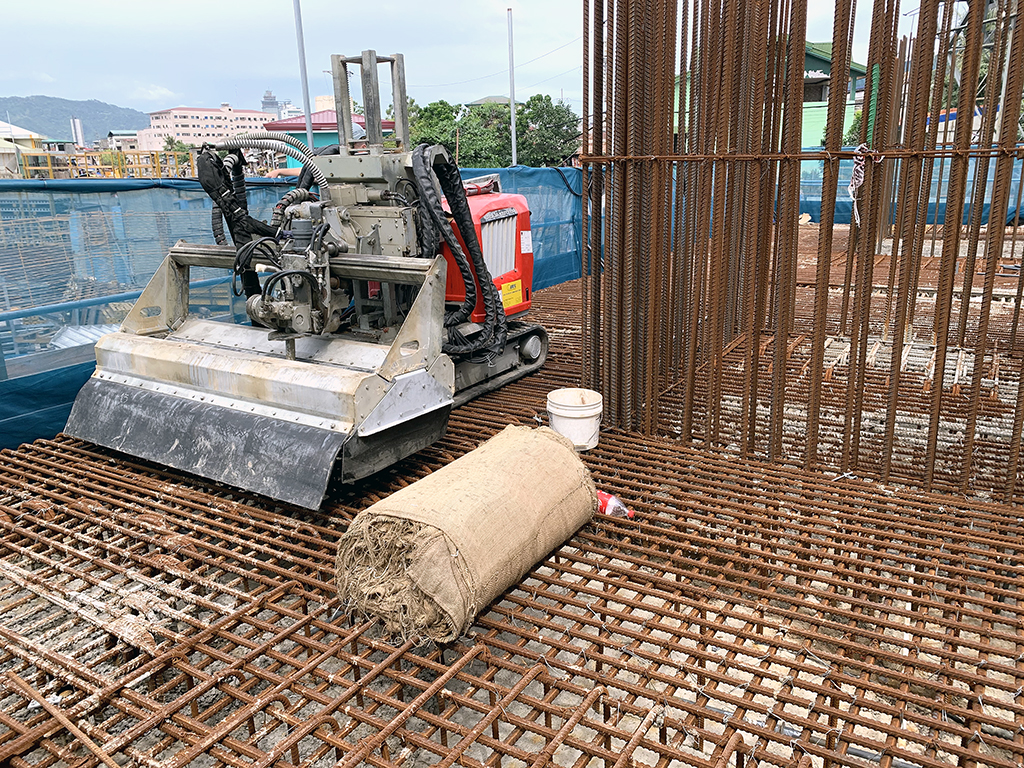
La Cebu Link Joint Venture (CLJV) ha contattato Asia Waterjet Equipment di Singapore, i maggiori esperti di idrodemolizione della regione. L’accesso e le condizioni del sito rappresentavano una sfida, ma con decenni di esperienza in alcune delle applicazioni più pericolose, Asia Waterjet Equipment era più che all’altezza del compito. Con il passare del tempo e la stagione dei monsoni in pieno svolgimento, il team è arrivato sul posto con un robot per idrodemolizione Aqua Cutter 710V e una pompa per idrodemolizione Jetstream HP.
 

No matter the project — from a simple structure to a massive, multi-million-dollar bridge system — efficient construction requires thorough planning. But, even with flawless logistics, projects can run into challenges that put deadlines in jeopardy. Construction is currently underway in the Philippines on a massive bridge system connecting Cebu City with Cordova on the southern end of Mactan Island. The 8.5-kilometer (5.3-mile) Cebu-Cordova Link Expressway, slated for completion in 2021, will span the Mactan Channel with 51-meter (167-feet) navigational clearance for shipping vessels. It promises to ease congestion between Cebu and Mactan and boost economic activities throughout the region by providing additional access to the island and the Mactan-Cebu International Airport for an estimated 50,000 vehicles a day. As expected, the construction — one of the largest infrastructure projects in the country — relies on a carefully choreographed plan of simultaneous operations to meet strict deadlines. Expert logistics allow crews to avoid many hurdles; however, unforeseen challenges can still arise. When a bad batch of concrete threatened to derail progress on one of the bridge’s first pilons, project managers needed a creative solution that could quickly remove the poor-quality concrete without damaging the rebar or putting the project behind schedule. Hydrodemolition was the only process with the precision and productivity to keep the project on track. Cebu Link Joint Venture (CLJV) contacted Singapore-based Asia Waterjet Equipment, the region’s premier Hydrodemolition experts. Access and site conditions presented quite a challenge, but with decades of experience in some of the most hazardous applications, Asia Waterjet Equipment was more than up to the task. With the clock ticking and monsoon season in full swing, the team arrived onsite with an Aquajet Aqua Cutter 710V Hydrodemolition robot and Jetstream HP Waterjetting Pump. Passion for Problem Solving In the early 1990s, Asia Waterjet Equipment’s founders were part of the brave crews tasked with containing oil wells in Kuwait that were destroyed during the Persian Gulf War. Their experience helped avert a huge environmental crisis. They remained in the Middle East, eventually founding Asia Waterjet Equipment in 2006, bringing high-pressure water jetting and robotic Hydrodemolition to the Middle East and South East Asia. Now, with offices in Dubai, Abu Dhabi, Saudi Arabia, Bahrain and Singapore and a strong presence and partnerships throughout these territories, the company is known for creative problem solving — delivering innovative cutting and cleaning solutions for hazardous areas or difficult to pump products in petrochemical, wastewater, mining, construction and other industries. They also offer a range of robotic solutions to help customers protect employees and perform beyond expectations. “Our focus has always been providing the cutting-edge tools to make challenging applications safer and more efficient,” said Chris Parkhill, Asia Waterjet Equipment Sales Director for Southeast Asia. “From the very beginning, we’ve been involved in some of the most hazardous operations out there. We understand the demands and dangers, which is why we partner with industry-leading equipment manufacturers for robust solutions that maximize safety and productivity.” Pairing the right tools with experienced team members who bring a wealth of industry knowledge and a deep understanding of local markets to each project has earned Asia Waterjet Equipment a reputation for high-quality results. In emerging markets, such as the Philippines, where the demands of multi-million-dollar projects have become a proving ground for newer, more efficient technologies, this expertise puts the company at the forefront. “From North Africa to South East Asia, we cover a lot of ground,” Parkhill said. “But being able to meet the contractor where they are is key to a successful solution. Working with CLJV, there were a number of challenges we had to overcome to keep the project on track. Hydrodemolition was the best solution and Aquajet was the best tool for the job.” Troubled Water Access was the primary problem. CLJV was conducting construction on several bridge pilons simultaneously. To minimize disruptions to the local community, the project’s primary staging area, as well as the initial pilon, were only accessible from the coast. This meant the concrete had to be mixed 2.5 kilometers (1.6 miles) down the coast then transported by barge to the jobsite. From there, the barge was grounded, and the trucks disembarked directly onto the beach. The pilon was 30 meters (98 feet) inland. Overall, the transportation delay had no negative impacts on the concrete, and the 16-by-14-meter (52.5-by-45.9-foot) pilon quickly grew to 4 meters (13 feet) tall. However, a complication with a single delivery threatened to throw the entire project behind schedule and over budget. “When you are working with concrete, sometimes things don’t go to plan,” Parkhill said. “It’s a delicate equation, after all, and even a slight miscalculation can ruin the mixture. Unfortunately, when that happens, there isn’t an easy fix.” Crews knew there was a problem immediately. The concrete was already setting as they pumped. Vibrating and other correctional methods failed, and the pour was ultimately unsuccessful. Even worse, the concrete fell 350 millimeters (13.8 inches) short, leaving a mesh of exposed rebar. For CLJV and Asia Waterjet Equipment, the challenges were adding up, making for a very difficult repair. The pilon was nearly complete. While CLJV had budgeted time and money for small complications, it could not afford to demolish the whole pilon and start over. Crews with handheld breakers or excavators could remove the poor-quality concrete, but only by destroying the rebar. They would have to cut the exposed rebar at the top of the pilon to access the concrete a foot below. More rebar would be damaged as the poor-quality concrete was removed, and microfractures from the vibration of jackhammers or excavators would weaken the remaining concrete, jeopardizing the pilon’s integrity. “There was no option; the rebar and existing good concrete had to be protected,” Parkhill said. “If CLJV went with traditional demolition methods, they’d have to open, pry apart where possible or cut the rebar and manually jack hammer out the bad concrete. There’s no guarantee a man using a jack hammer could gauge what’s good and what’s bad, so they’d end up removing extra. Then they’d have to bend the rebar back into place without breaking it, or weld or cut new threads and join with it threaded couplers. It would add weeks to the project and a significant cost to the budget. They simply couldn’t afford it.” Asia Waterjet Equipment knew Hydrodemolition was the only solution. The non-intrusive method uses high-pressure water jets as powerful as 40,000 psi manipulated by an automated robot to remove layers of deteriorated and damaged concrete. The high-pressure water exceeds the strength of the concrete to widen existing pores and microcracks, breaking it apart in a controlled manner. Unlike other mechanical methods, Hydrodemolition is impact free, eliminating the vibrations that cause microfractures. Additionally, the method meets European Standards EN 1504 and provides a superior bonding surface for new concrete. The Aqua Cutter 710V’s high-pressure water jet leaves a rough, irregular profile after removing the initial layer of concrete that results in a better bonding strength. The robot also cleans and descales the exposed rebar and removes non-visible contaminants such as dirt, mud, foundation mud, salts, chlorides and sulfates. Building Bridges Productivity was also a concern. With simultaneous construction continuing on several other pilons in the area, crews needed to remove the poor-quality concrete and complete repairs quickly — with minimal labor. With the ability to complete concrete removal tasks up to 25 times faster than a hand lance, the Aqua Cutter provided the necessary solution to keep the project on schedule. Asia Waterjet Equipment brought in Aquajet Special Application Manager Kjell Isaksson to support the operation. “There were a lot of variables and no room for error,” Parkhill said. “To minimize the risk of delays, we decided it would be best to have an Aquajet specialist on site.” Like the cement trucks, the Aqua Cutter and all support equipment, including a high-pressure waterjet power pack with a 4200 series Jetstream pump, had to access the site from the Mactan Chanel. Proximity to the water and the frequent, heavy rains of monsoon season made ground conditions difficult. However, since the Aqua Cutter is self-propelled with tracks, the uneven, muddy terrain presented no problems for Asia Waterjet Equipment. This minimized necessary site preparations and helped accelerate repairs. Crossing the Bridge to Success This mobility was also necessary for tackling the demolition itself. Once lifted the 4 meters (13 feet) onto the pile cap by a crane, the Aqua Cutter was able to easily maneuver over the rebar. The high-pressure pump was setup 7 meters (23 feet) away and connected to the Hydrodemolition robot by a high-pressure hose. To help reduce cost and increase production, Asia Waterjet Equipment opted to use seawater for the majority of the demolition rather than bring in fresh water. The company continually filled two 20-cubic meter (5,283 gallon) night tanks directly from the Mactan Chanel. Fresh water was only used during the last two days of the project to remove salt and other impurities that could impact bonding. Using the Hydrodemolition robot, operating at 1,000 bar (15,000 psi), and two employees, Asia Waterjet Equipment removed 10 cubic meters (13 cubic yards) of poor-quality concrete at a depth of 150-250 millimeters (6-10 inches) in days. “With the Aquajet Aqua Cutter, we increased productivity to a point where construction was back on schedule,” Parkhill said. “Without Hydrodemolition, there’s no way CLJV would have been able to do that.” The Future of Hydrodemolition While construction on the bridge system continues, Asia Waterjet Equipment is already on to the next challenge. “Construction in Southeast Asia is changing,” Parkhill said. “Robotic processes like Hydrodemolition are proving you can have productivity and safety. With innovative partners like Aquajet, Asia Waterjet Equipment is playing a leading role in facilitating that change.”

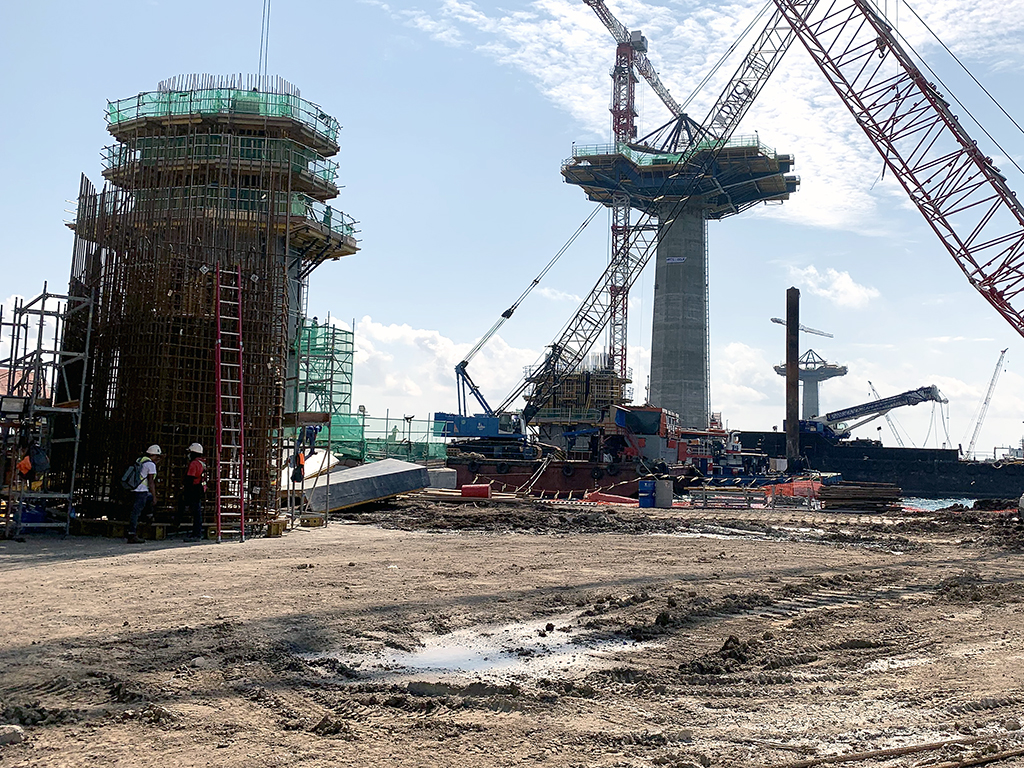
Quando un lotto di calcestruzzo scadente ha rischiato di far deragliare i progressi di un importante progetto di ponte nelle Filippine, Asia Waterjet Equipment si è rivolta ad Aquajet per trovare una soluzione creativa che permettesse di rimuovere rapidamente il calcestruzzo di scarsa qualità senza danneggiare le armature o far slittare il progetto.


Passione per la risoluzione dei problemi

All’inizio degli anni ’90, i fondatori di Asia Waterjet Equipment facevano parte delle coraggiose squadre incaricate di contenere i pozzi di petrolio in Kuwait distrutti durante la Guerra del Golfo Persico. La loro esperienza ha contribuito a scongiurare un’enorme crisi ambientale. Rimasti in Medio Oriente, nel 2006 fondarono Asia Waterjet Equipment, portando il getto d’acqua ad alta pressione e l’idrodemolizione robotica in Medio Oriente e nel Sud-Est asiatico.

Oggi, con uffici a Dubai, Abu Dhabi, Arabia Saudita, Bahrein e Singapore e una forte presenza e partnership in tutti questi territori, l’azienda è nota per la sua capacità di risolvere i problemi in modo creativo, offrendo soluzioni innovative per il taglio e la pulizia di aree pericolose o prodotti difficili da pompare nei settori petrolchimico, delle acque reflue, minerario, edile e altri. L’azienda offre anche una serie di soluzioni robotiche per aiutare i clienti a proteggere i dipendenti e a ottenere prestazioni superiori alle aspettative.

“Il nostro obiettivo è sempre stato quello di fornire strumenti all’avanguardia per rendere più sicure ed efficienti le applicazioni più complesse”, ha dichiarato Chris Parkhill, Direttore Vendite Asia Waterjet Equipment per il Sud-Est asiatico. “Fin dall’inizio abbiamo partecipato ad alcune delle operazioni più pericolose. Conosciamo le esigenze e i pericoli, ed è per questo che collaboriamo con i produttori di attrezzature leader del settore per ottenere soluzioni robuste che massimizzano la sicurezza e la produttività.”

L’abbinamento degli strumenti giusti con membri del team esperti che apportano una vasta conoscenza del settore e una profonda comprensione dei mercati locali a ogni progetto ha fatto guadagnare ad Asia Waterjet Equipment una reputazione di risultati di alta qualità. Nei mercati emergenti, come le Filippine, dove le esigenze di progetti multimilionari sono diventate un terreno di prova per tecnologie più nuove ed efficienti, questa esperienza pone l’azienda all’avanguardia.

“Dal Nord Africa al Sud Est Asiatico, copriamo un’ampia gamma di aree”, ha detto Parkhill. “Ma essere in grado di incontrare l’appaltatore dove si trova è la chiave per una soluzione di successo. Lavorando con CLJV, abbiamo dovuto superare una serie di sfide per mantenere il progetto in linea con i tempi. L’idrodemolizione era la soluzione migliore e Aquajet era lo strumento migliore per questo lavoro”.
 

No matter the project — from a simple structure to a massive, multi-million-dollar bridge system — efficient construction requires thorough planning. But, even with flawless logistics, projects can run into challenges that put deadlines in jeopardy. Construction is currently underway in the Philippines on a massive bridge system connecting Cebu City with Cordova on the southern end of Mactan Island. The 8.5-kilometer (5.3-mile) Cebu-Cordova Link Expressway, slated for completion in 2021, will span the Mactan Channel with 51-meter (167-feet) navigational clearance for shipping vessels. It promises to ease congestion between Cebu and Mactan and boost economic activities throughout the region by providing additional access to the island and the Mactan-Cebu International Airport for an estimated 50,000 vehicles a day. As expected, the construction — one of the largest infrastructure projects in the country — relies on a carefully choreographed plan of simultaneous operations to meet strict deadlines. Expert logistics allow crews to avoid many hurdles; however, unforeseen challenges can still arise. When a bad batch of concrete threatened to derail progress on one of the bridge’s first pilons, project managers needed a creative solution that could quickly remove the poor-quality concrete without damaging the rebar or putting the project behind schedule. Hydrodemolition was the only process with the precision and productivity to keep the project on track. Cebu Link Joint Venture (CLJV) contacted Singapore-based Asia Waterjet Equipment, the region’s premier Hydrodemolition experts. Access and site conditions presented quite a challenge, but with decades of experience in some of the most hazardous applications, Asia Waterjet Equipment was more than up to the task. With the clock ticking and monsoon season in full swing, the team arrived onsite with an Aquajet Aqua Cutter 710V Hydrodemolition robot and Jetstream HP Waterjetting Pump. Passion for Problem Solving In the early 1990s, Asia Waterjet Equipment’s founders were part of the brave crews tasked with containing oil wells in Kuwait that were destroyed during the Persian Gulf War. Their experience helped avert a huge environmental crisis. They remained in the Middle East, eventually founding Asia Waterjet Equipment in 2006, bringing high-pressure water jetting and robotic Hydrodemolition to the Middle East and South East Asia. Now, with offices in Dubai, Abu Dhabi, Saudi Arabia, Bahrain and Singapore and a strong presence and partnerships throughout these territories, the company is known for creative problem solving — delivering innovative cutting and cleaning solutions for hazardous areas or difficult to pump products in petrochemical, wastewater, mining, construction and other industries. They also offer a range of robotic solutions to help customers protect employees and perform beyond expectations. “Our focus has always been providing the cutting-edge tools to make challenging applications safer and more efficient,” said Chris Parkhill, Asia Waterjet Equipment Sales Director for Southeast Asia. “From the very beginning, we’ve been involved in some of the most hazardous operations out there. We understand the demands and dangers, which is why we partner with industry-leading equipment manufacturers for robust solutions that maximize safety and productivity.” Pairing the right tools with experienced team members who bring a wealth of industry knowledge and a deep understanding of local markets to each project has earned Asia Waterjet Equipment a reputation for high-quality results. In emerging markets, such as the Philippines, where the demands of multi-million-dollar projects have become a proving ground for newer, more efficient technologies, this expertise puts the company at the forefront. “From North Africa to South East Asia, we cover a lot of ground,” Parkhill said. “But being able to meet the contractor where they are is key to a successful solution. Working with CLJV, there were a number of challenges we had to overcome to keep the project on track. Hydrodemolition was the best solution and Aquajet was the best tool for the job.” Troubled Water Access was the primary problem. CLJV was conducting construction on several bridge pilons simultaneously. To minimize disruptions to the local community, the project’s primary staging area, as well as the initial pilon, were only accessible from the coast. This meant the concrete had to be mixed 2.5 kilometers (1.6 miles) down the coast then transported by barge to the jobsite. From there, the barge was grounded, and the trucks disembarked directly onto the beach. The pilon was 30 meters (98 feet) inland. Overall, the transportation delay had no negative impacts on the concrete, and the 16-by-14-meter (52.5-by-45.9-foot) pilon quickly grew to 4 meters (13 feet) tall. However, a complication with a single delivery threatened to throw the entire project behind schedule and over budget. “When you are working with concrete, sometimes things don’t go to plan,” Parkhill said. “It’s a delicate equation, after all, and even a slight miscalculation can ruin the mixture. Unfortunately, when that happens, there isn’t an easy fix.” Crews knew there was a problem immediately. The concrete was already setting as they pumped. Vibrating and other correctional methods failed, and the pour was ultimately unsuccessful. Even worse, the concrete fell 350 millimeters (13.8 inches) short, leaving a mesh of exposed rebar. For CLJV and Asia Waterjet Equipment, the challenges were adding up, making for a very difficult repair. The pilon was nearly complete. While CLJV had budgeted time and money for small complications, it could not afford to demolish the whole pilon and start over. Crews with handheld breakers or excavators could remove the poor-quality concrete, but only by destroying the rebar. They would have to cut the exposed rebar at the top of the pilon to access the concrete a foot below. More rebar would be damaged as the poor-quality concrete was removed, and microfractures from the vibration of jackhammers or excavators would weaken the remaining concrete, jeopardizing the pilon’s integrity. “There was no option; the rebar and existing good concrete had to be protected,” Parkhill said. “If CLJV went with traditional demolition methods, they’d have to open, pry apart where possible or cut the rebar and manually jack hammer out the bad concrete. There’s no guarantee a man using a jack hammer could gauge what’s good and what’s bad, so they’d end up removing extra. Then they’d have to bend the rebar back into place without breaking it, or weld or cut new threads and join with it threaded couplers. It would add weeks to the project and a significant cost to the budget. They simply couldn’t afford it.” Asia Waterjet Equipment knew Hydrodemolition was the only solution. The non-intrusive method uses high-pressure water jets as powerful as 40,000 psi manipulated by an automated robot to remove layers of deteriorated and damaged concrete. The high-pressure water exceeds the strength of the concrete to widen existing pores and microcracks, breaking it apart in a controlled manner. Unlike other mechanical methods, Hydrodemolition is impact free, eliminating the vibrations that cause microfractures. Additionally, the method meets European Standards EN 1504 and provides a superior bonding surface for new concrete. The Aqua Cutter 710V’s high-pressure water jet leaves a rough, irregular profile after removing the initial layer of concrete that results in a better bonding strength. The robot also cleans and descales the exposed rebar and removes non-visible contaminants such as dirt, mud, foundation mud, salts, chlorides and sulfates. Building Bridges Productivity was also a concern. With simultaneous construction continuing on several other pilons in the area, crews needed to remove the poor-quality concrete and complete repairs quickly — with minimal labor. With the ability to complete concrete removal tasks up to 25 times faster than a hand lance, the Aqua Cutter provided the necessary solution to keep the project on schedule. Asia Waterjet Equipment brought in Aquajet Special Application Manager Kjell Isaksson to support the operation. “There were a lot of variables and no room for error,” Parkhill said. “To minimize the risk of delays, we decided it would be best to have an Aquajet specialist on site.” Like the cement trucks, the Aqua Cutter and all support equipment, including a high-pressure waterjet power pack with a 4200 series Jetstream pump, had to access the site from the Mactan Chanel. Proximity to the water and the frequent, heavy rains of monsoon season made ground conditions difficult. However, since the Aqua Cutter is self-propelled with tracks, the uneven, muddy terrain presented no problems for Asia Waterjet Equipment. This minimized necessary site preparations and helped accelerate repairs. Crossing the Bridge to Success This mobility was also necessary for tackling the demolition itself. Once lifted the 4 meters (13 feet) onto the pile cap by a crane, the Aqua Cutter was able to easily maneuver over the rebar. The high-pressure pump was setup 7 meters (23 feet) away and connected to the Hydrodemolition robot by a high-pressure hose. To help reduce cost and increase production, Asia Waterjet Equipment opted to use seawater for the majority of the demolition rather than bring in fresh water. The company continually filled two 20-cubic meter (5,283 gallon) night tanks directly from the Mactan Chanel. Fresh water was only used during the last two days of the project to remove salt and other impurities that could impact bonding. Using the Hydrodemolition robot, operating at 1,000 bar (15,000 psi), and two employees, Asia Waterjet Equipment removed 10 cubic meters (13 cubic yards) of poor-quality concrete at a depth of 150-250 millimeters (6-10 inches) in days. “With the Aquajet Aqua Cutter, we increased productivity to a point where construction was back on schedule,” Parkhill said. “Without Hydrodemolition, there’s no way CLJV would have been able to do that.” The Future of Hydrodemolition While construction on the bridge system continues, Asia Waterjet Equipment is already on to the next challenge. “Construction in Southeast Asia is changing,” Parkhill said. “Robotic processes like Hydrodemolition are proving you can have productivity and safety. With innovative partners like Aquajet, Asia Waterjet Equipment is playing a leading role in facilitating that change.”

Per proteggere le armature e il buon calcestruzzo esistente, Asia Waterjet Equipment sapeva che l’idrodemolizione era l’unica soluzione. Questo metodo non invasivo utilizza getti d’acqua ad alta pressione fino a 40.000 psi manipolati da un robot automatizzato per rimuovere gli strati di calcestruzzo deteriorato e danneggiato.
 

No matter the project — from a simple structure to a massive, multi-million-dollar bridge system — efficient construction requires thorough planning. But, even with flawless logistics, projects can run into challenges that put deadlines in jeopardy. Construction is currently underway in the Philippines on a massive bridge system connecting Cebu City with Cordova on the southern end of Mactan Island. The 8.5-kilometer (5.3-mile) Cebu-Cordova Link Expressway, slated for completion in 2021, will span the Mactan Channel with 51-meter (167-feet) navigational clearance for shipping vessels. It promises to ease congestion between Cebu and Mactan and boost economic activities throughout the region by providing additional access to the island and the Mactan-Cebu International Airport for an estimated 50,000 vehicles a day. As expected, the construction — one of the largest infrastructure projects in the country — relies on a carefully choreographed plan of simultaneous operations to meet strict deadlines. Expert logistics allow crews to avoid many hurdles; however, unforeseen challenges can still arise. When a bad batch of concrete threatened to derail progress on one of the bridge’s first pilons, project managers needed a creative solution that could quickly remove the poor-quality concrete without damaging the rebar or putting the project behind schedule. Hydrodemolition was the only process with the precision and productivity to keep the project on track. Cebu Link Joint Venture (CLJV) contacted Singapore-based Asia Waterjet Equipment, the region’s premier Hydrodemolition experts. Access and site conditions presented quite a challenge, but with decades of experience in some of the most hazardous applications, Asia Waterjet Equipment was more than up to the task. With the clock ticking and monsoon season in full swing, the team arrived onsite with an Aquajet Aqua Cutter 710V Hydrodemolition robot and Jetstream HP Waterjetting Pump. Passion for Problem Solving In the early 1990s, Asia Waterjet Equipment’s founders were part of the brave crews tasked with containing oil wells in Kuwait that were destroyed during the Persian Gulf War. Their experience helped avert a huge environmental crisis. They remained in the Middle East, eventually founding Asia Waterjet Equipment in 2006, bringing high-pressure water jetting and robotic Hydrodemolition to the Middle East and South East Asia. Now, with offices in Dubai, Abu Dhabi, Saudi Arabia, Bahrain and Singapore and a strong presence and partnerships throughout these territories, the company is known for creative problem solving — delivering innovative cutting and cleaning solutions for hazardous areas or difficult to pump products in petrochemical, wastewater, mining, construction and other industries. They also offer a range of robotic solutions to help customers protect employees and perform beyond expectations. “Our focus has always been providing the cutting-edge tools to make challenging applications safer and more efficient,” said Chris Parkhill, Asia Waterjet Equipment Sales Director for Southeast Asia. “From the very beginning, we’ve been involved in some of the most hazardous operations out there. We understand the demands and dangers, which is why we partner with industry-leading equipment manufacturers for robust solutions that maximize safety and productivity.” Pairing the right tools with experienced team members who bring a wealth of industry knowledge and a deep understanding of local markets to each project has earned Asia Waterjet Equipment a reputation for high-quality results. In emerging markets, such as the Philippines, where the demands of multi-million-dollar projects have become a proving ground for newer, more efficient technologies, this expertise puts the company at the forefront. “From North Africa to South East Asia, we cover a lot of ground,” Parkhill said. “But being able to meet the contractor where they are is key to a successful solution. Working with CLJV, there were a number of challenges we had to overcome to keep the project on track. Hydrodemolition was the best solution and Aquajet was the best tool for the job.” Troubled Water Access was the primary problem. CLJV was conducting construction on several bridge pilons simultaneously. To minimize disruptions to the local community, the project’s primary staging area, as well as the initial pilon, were only accessible from the coast. This meant the concrete had to be mixed 2.5 kilometers (1.6 miles) down the coast then transported by barge to the jobsite. From there, the barge was grounded, and the trucks disembarked directly onto the beach. The pilon was 30 meters (98 feet) inland. Overall, the transportation delay had no negative impacts on the concrete, and the 16-by-14-meter (52.5-by-45.9-foot) pilon quickly grew to 4 meters (13 feet) tall. However, a complication with a single delivery threatened to throw the entire project behind schedule and over budget. “When you are working with concrete, sometimes things don’t go to plan,” Parkhill said. “It’s a delicate equation, after all, and even a slight miscalculation can ruin the mixture. Unfortunately, when that happens, there isn’t an easy fix.” Crews knew there was a problem immediately. The concrete was already setting as they pumped. Vibrating and other correctional methods failed, and the pour was ultimately unsuccessful. Even worse, the concrete fell 350 millimeters (13.8 inches) short, leaving a mesh of exposed rebar. For CLJV and Asia Waterjet Equipment, the challenges were adding up, making for a very difficult repair. The pilon was nearly complete. While CLJV had budgeted time and money for small complications, it could not afford to demolish the whole pilon and start over. Crews with handheld breakers or excavators could remove the poor-quality concrete, but only by destroying the rebar. They would have to cut the exposed rebar at the top of the pilon to access the concrete a foot below. More rebar would be damaged as the poor-quality concrete was removed, and microfractures from the vibration of jackhammers or excavators would weaken the remaining concrete, jeopardizing the pilon’s integrity. “There was no option; the rebar and existing good concrete had to be protected,” Parkhill said. “If CLJV went with traditional demolition methods, they’d have to open, pry apart where possible or cut the rebar and manually jack hammer out the bad concrete. There’s no guarantee a man using a jack hammer could gauge what’s good and what’s bad, so they’d end up removing extra. Then they’d have to bend the rebar back into place without breaking it, or weld or cut new threads and join with it threaded couplers. It would add weeks to the project and a significant cost to the budget. They simply couldn’t afford it.” Asia Waterjet Equipment knew Hydrodemolition was the only solution. The non-intrusive method uses high-pressure water jets as powerful as 40,000 psi manipulated by an automated robot to remove layers of deteriorated and damaged concrete. The high-pressure water exceeds the strength of the concrete to widen existing pores and microcracks, breaking it apart in a controlled manner. Unlike other mechanical methods, Hydrodemolition is impact free, eliminating the vibrations that cause microfractures. Additionally, the method meets European Standards EN 1504 and provides a superior bonding surface for new concrete. The Aqua Cutter 710V’s high-pressure water jet leaves a rough, irregular profile after removing the initial layer of concrete that results in a better bonding strength. The robot also cleans and descales the exposed rebar and removes non-visible contaminants such as dirt, mud, foundation mud, salts, chlorides and sulfates. Building Bridges Productivity was also a concern. With simultaneous construction continuing on several other pilons in the area, crews needed to remove the poor-quality concrete and complete repairs quickly — with minimal labor. With the ability to complete concrete removal tasks up to 25 times faster than a hand lance, the Aqua Cutter provided the necessary solution to keep the project on schedule. Asia Waterjet Equipment brought in Aquajet Special Application Manager Kjell Isaksson to support the operation. “There were a lot of variables and no room for error,” Parkhill said. “To minimize the risk of delays, we decided it would be best to have an Aquajet specialist on site.” Like the cement trucks, the Aqua Cutter and all support equipment, including a high-pressure waterjet power pack with a 4200 series Jetstream pump, had to access the site from the Mactan Chanel. Proximity to the water and the frequent, heavy rains of monsoon season made ground conditions difficult. However, since the Aqua Cutter is self-propelled with tracks, the uneven, muddy terrain presented no problems for Asia Waterjet Equipment. This minimized necessary site preparations and helped accelerate repairs. Crossing the Bridge to Success This mobility was also necessary for tackling the demolition itself. Once lifted the 4 meters (13 feet) onto the pile cap by a crane, the Aqua Cutter was able to easily maneuver over the rebar. The high-pressure pump was setup 7 meters (23 feet) away and connected to the Hydrodemolition robot by a high-pressure hose. To help reduce cost and increase production, Asia Waterjet Equipment opted to use seawater for the majority of the demolition rather than bring in fresh water. The company continually filled two 20-cubic meter (5,283 gallon) night tanks directly from the Mactan Chanel. Fresh water was only used during the last two days of the project to remove salt and other impurities that could impact bonding. Using the Hydrodemolition robot, operating at 1,000 bar (15,000 psi), and two employees, Asia Waterjet Equipment removed 10 cubic meters (13 cubic yards) of poor-quality concrete at a depth of 150-250 millimeters (6-10 inches) in days. “With the Aquajet Aqua Cutter, we increased productivity to a point where construction was back on schedule,” Parkhill said. “Without Hydrodemolition, there’s no way CLJV would have been able to do that.” The Future of Hydrodemolition While construction on the bridge system continues, Asia Waterjet Equipment is already on to the next challenge. “Construction in Southeast Asia is changing,” Parkhill said. “Robotic processes like Hydrodemolition are proving you can have productivity and safety. With innovative partners like Aquajet, Asia Waterjet Equipment is playing a leading role in facilitating that change.”

Le squadre con demolitori manuali o escavatori potevano rimuovere il calcestruzzo di scarsa qualità, ma solo distruggendo le armature. Asia Waterjet Equipment sapeva che l’idrodemolizione era l’unico processo in grado di garantire la precisione e la produttività necessarie per portare avanti il progetto.


Acqua tormentata

Il problema principale era l’accesso. La CLJV stava costruendo contemporaneamente diversi piloni del ponte. Per ridurre al minimo i disagi per la comunità locale, l’area di sosta principale del progetto e il pilone iniziale erano accessibili solo dalla costa. Ciò significava che il calcestruzzo doveva essere mescolato per 2,5 chilometri (1,6 miglia) lungo la costa e poi trasportato su una chiatta fino al cantiere. Da lì, la chiatta veniva messa a terra e i camion sbarcavano direttamente sulla spiaggia. Il pilone si trovava a 30 metri (98 piedi) nell’entroterra.

Nel complesso, il ritardo nel trasporto non ha avuto alcun impatto negativo sul calcestruzzo e il pilone di 16 per 14 metri (52,5 per 45,9 piedi) è cresciuto rapidamente fino a 4 metri (13 piedi) di altezza. Tuttavia, una complicazione con una singola consegna ha minacciato di far slittare l’intero progetto rispetto alla tabella di marcia e al budget.

“Quando si lavora con il calcestruzzo, a volte le cose non vanno secondo i piani”, ha detto Parkhill. “È un’equazione delicata, dopotutto, e anche un piccolo errore di calcolo può rovinare la miscela. Purtroppo, quando succede, non c’è una soluzione facile”.

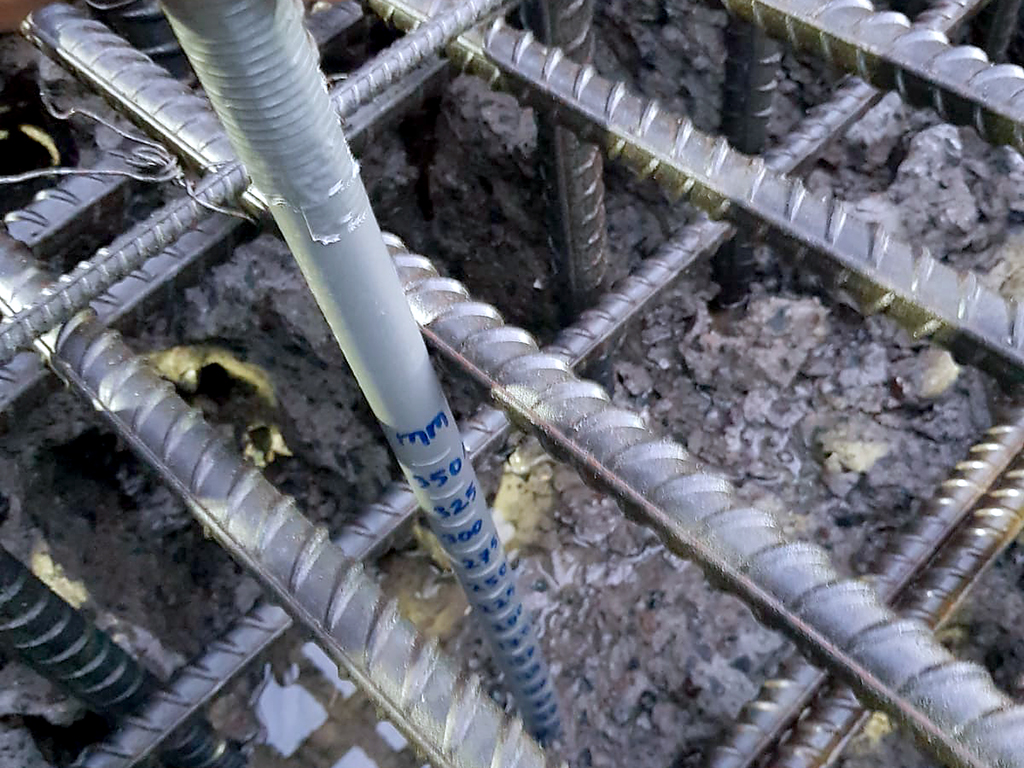
Le squadre hanno capito subito che c’era un problema. Il calcestruzzo si stava già rapprendendo mentre pompavano. Le vibrazioni e gli altri metodi correttivi non hanno funzionato e la gettata è risultata infruttuosa. Ancora peggio, il calcestruzzo è sceso di 350 millimetri (13,8 pollici), lasciando una rete di armature esposte.

Per CLJV e Asia Waterjet Equipment, le sfide si stavano accumulando, rendendo la riparazione molto difficile. Il pilone era quasi completo. Sebbene CLJV avesse preventivato tempo e denaro per le piccole complicazioni, non poteva permettersi di demolire l’intero pilone e ricominciare da capo.

Le squadre con demolitori manuali o escavatori potevano rimuovere il calcestruzzo di scarsa qualità, ma solo distruggendo l’armatura. Dovrebbero tagliare l’armatura esposta in cima al pilone per accedere al calcestruzzo 30 cm più in basso. Altre armature verrebbero danneggiate con la rimozione del calcestruzzo di scarsa qualità e le microfratture causate dalle vibrazioni dei martelli pneumatici o degli escavatori indebolirebbero il calcestruzzo rimanente, mettendo a rischio l’integrità del pilone.

“Non c’era altra scelta: le armature e il calcestruzzo buono esistente dovevano essere protetti”, ha detto Parkhill. “Se CLJV avesse scelto i metodi di demolizione tradizionali, avrebbe dovuto aprire, fare leva dove possibile o tagliare le armature e rimuovere manualmente il calcestruzzo scadente con un martello pneumatico. Non c’è garanzia che un uomo che usa un martello pneumatico sia in grado di valutare cosa è buono e cosa è cattivo, quindi finirebbe per rimuovere qualcosa in più. Poi dovrebbero piegare l’armatura per rimetterla al suo posto senza romperla, oppure saldare o tagliare nuovi filetti e unirli con accoppiatori filettati. Questo avrebbe aggiunto settimane al progetto e un costo significativo al budget. Semplicemente non potevano permetterselo”.

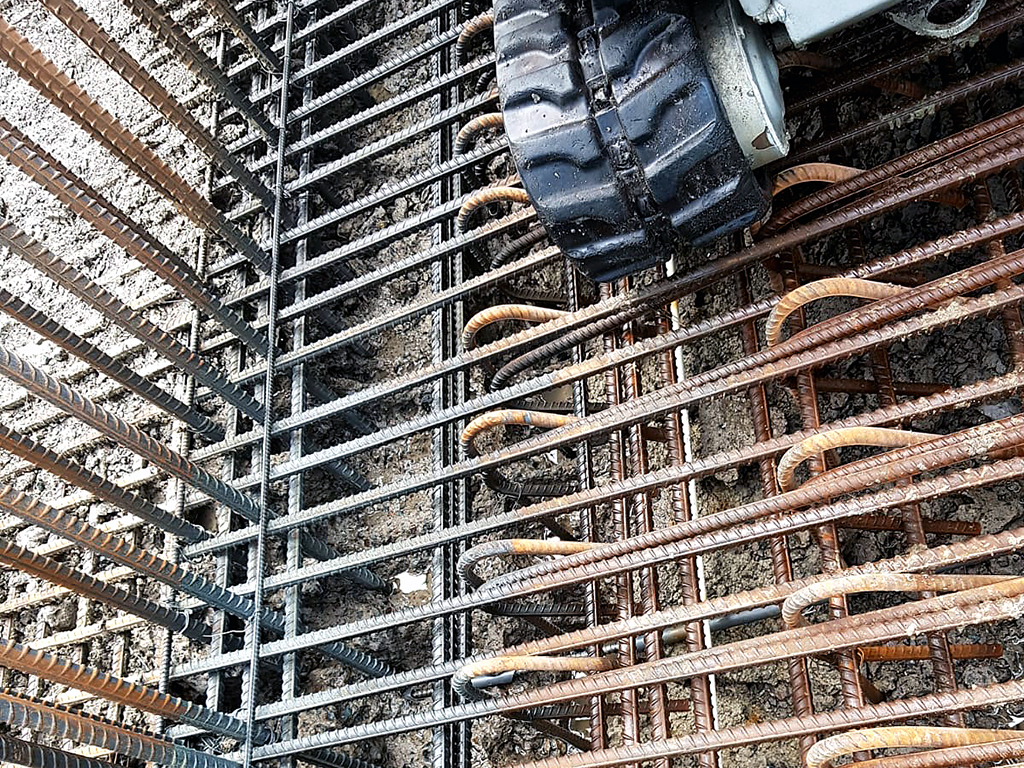
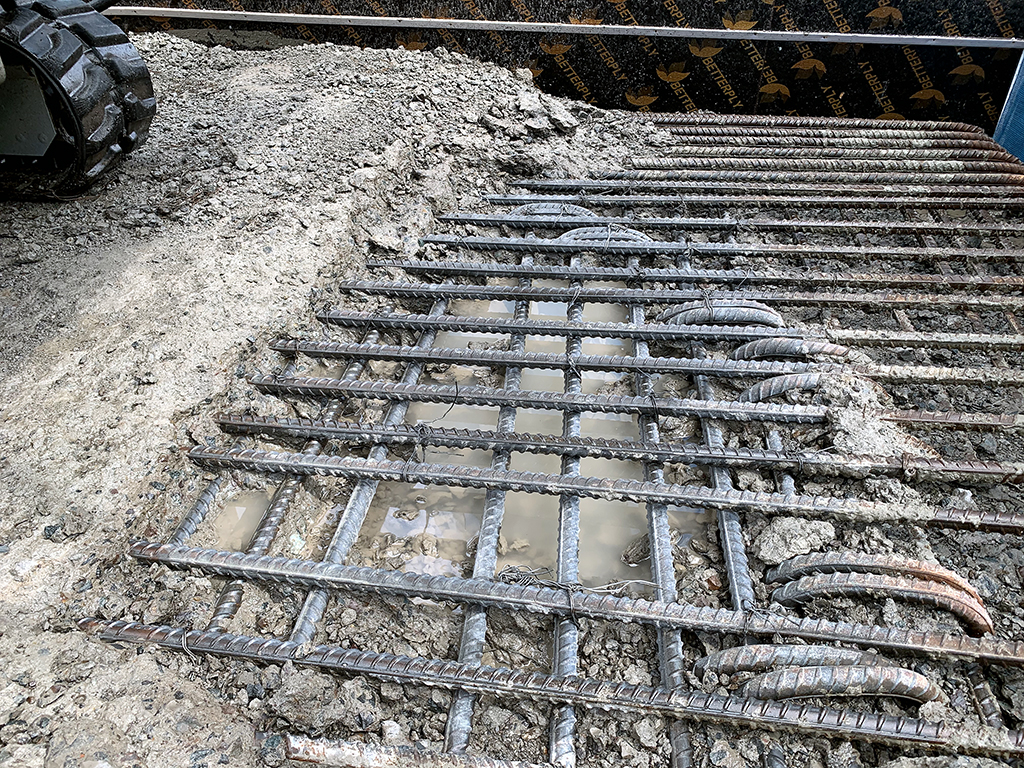
Asia Waterjet Equipment sapeva che l’idrodemolizione era l’unica soluzione. Questo metodo non invasivo utilizza getti d’acqua ad alta pressione fino a 40.000 psi manipolati da un robot automatizzato per rimuovere strati di calcestruzzo deteriorato e danneggiato. L’acqua ad alta pressione supera la resistenza del calcestruzzo per allargare i pori e le microfessure esistenti, rompendolo in modo controllato. A differenza di altri metodi meccanici, l’idrodemolizione è priva di impatto, eliminando le vibrazioni che causano le microfratture.

Inoltre, il metodo è conforme agli standard europei EN 1504 e fornisce una superficie di adesione superiore per il nuovo calcestruzzo. Il getto d’acqua ad alta pressione dell’Aqua Cutter 710V lascia un profilo irregolare e ruvido dopo la rimozione dello strato iniziale di calcestruzzo, che si traduce in una migliore forza di adesione. Il robot pulisce e decalcifica anche le armature esposte e rimuove i contaminanti non visibili come sporco, fango, fango di fondazione, sali, cloruri e solfati.
 

No matter the project — from a simple structure to a massive, multi-million-dollar bridge system — efficient construction requires thorough planning. But, even with flawless logistics, projects can run into challenges that put deadlines in jeopardy. Construction is currently underway in the Philippines on a massive bridge system connecting Cebu City with Cordova on the southern end of Mactan Island. The 8.5-kilometer (5.3-mile) Cebu-Cordova Link Expressway, slated for completion in 2021, will span the Mactan Channel with 51-meter (167-feet) navigational clearance for shipping vessels. It promises to ease congestion between Cebu and Mactan and boost economic activities throughout the region by providing additional access to the island and the Mactan-Cebu International Airport for an estimated 50,000 vehicles a day. As expected, the construction — one of the largest infrastructure projects in the country — relies on a carefully choreographed plan of simultaneous operations to meet strict deadlines. Expert logistics allow crews to avoid many hurdles; however, unforeseen challenges can still arise. When a bad batch of concrete threatened to derail progress on one of the bridge’s first pilons, project managers needed a creative solution that could quickly remove the poor-quality concrete without damaging the rebar or putting the project behind schedule. Hydrodemolition was the only process with the precision and productivity to keep the project on track. Cebu Link Joint Venture (CLJV) contacted Singapore-based Asia Waterjet Equipment, the region’s premier Hydrodemolition experts. Access and site conditions presented quite a challenge, but with decades of experience in some of the most hazardous applications, Asia Waterjet Equipment was more than up to the task. With the clock ticking and monsoon season in full swing, the team arrived onsite with an Aquajet Aqua Cutter 710V Hydrodemolition robot and Jetstream HP Waterjetting Pump. Passion for Problem Solving In the early 1990s, Asia Waterjet Equipment’s founders were part of the brave crews tasked with containing oil wells in Kuwait that were destroyed during the Persian Gulf War. Their experience helped avert a huge environmental crisis. They remained in the Middle East, eventually founding Asia Waterjet Equipment in 2006, bringing high-pressure water jetting and robotic Hydrodemolition to the Middle East and South East Asia. Now, with offices in Dubai, Abu Dhabi, Saudi Arabia, Bahrain and Singapore and a strong presence and partnerships throughout these territories, the company is known for creative problem solving — delivering innovative cutting and cleaning solutions for hazardous areas or difficult to pump products in petrochemical, wastewater, mining, construction and other industries. They also offer a range of robotic solutions to help customers protect employees and perform beyond expectations. “Our focus has always been providing the cutting-edge tools to make challenging applications safer and more efficient,” said Chris Parkhill, Asia Waterjet Equipment Sales Director for Southeast Asia. “From the very beginning, we’ve been involved in some of the most hazardous operations out there. We understand the demands and dangers, which is why we partner with industry-leading equipment manufacturers for robust solutions that maximize safety and productivity.” Pairing the right tools with experienced team members who bring a wealth of industry knowledge and a deep understanding of local markets to each project has earned Asia Waterjet Equipment a reputation for high-quality results. In emerging markets, such as the Philippines, where the demands of multi-million-dollar projects have become a proving ground for newer, more efficient technologies, this expertise puts the company at the forefront. “From North Africa to South East Asia, we cover a lot of ground,” Parkhill said. “But being able to meet the contractor where they are is key to a successful solution. Working with CLJV, there were a number of challenges we had to overcome to keep the project on track. Hydrodemolition was the best solution and Aquajet was the best tool for the job.” Troubled Water Access was the primary problem. CLJV was conducting construction on several bridge pilons simultaneously. To minimize disruptions to the local community, the project’s primary staging area, as well as the initial pilon, were only accessible from the coast. This meant the concrete had to be mixed 2.5 kilometers (1.6 miles) down the coast then transported by barge to the jobsite. From there, the barge was grounded, and the trucks disembarked directly onto the beach. The pilon was 30 meters (98 feet) inland. Overall, the transportation delay had no negative impacts on the concrete, and the 16-by-14-meter (52.5-by-45.9-foot) pilon quickly grew to 4 meters (13 feet) tall. However, a complication with a single delivery threatened to throw the entire project behind schedule and over budget. “When you are working with concrete, sometimes things don’t go to plan,” Parkhill said. “It’s a delicate equation, after all, and even a slight miscalculation can ruin the mixture. Unfortunately, when that happens, there isn’t an easy fix.” Crews knew there was a problem immediately. The concrete was already setting as they pumped. Vibrating and other correctional methods failed, and the pour was ultimately unsuccessful. Even worse, the concrete fell 350 millimeters (13.8 inches) short, leaving a mesh of exposed rebar. For CLJV and Asia Waterjet Equipment, the challenges were adding up, making for a very difficult repair. The pilon was nearly complete. While CLJV had budgeted time and money for small complications, it could not afford to demolish the whole pilon and start over. Crews with handheld breakers or excavators could remove the poor-quality concrete, but only by destroying the rebar. They would have to cut the exposed rebar at the top of the pilon to access the concrete a foot below. More rebar would be damaged as the poor-quality concrete was removed, and microfractures from the vibration of jackhammers or excavators would weaken the remaining concrete, jeopardizing the pilon’s integrity. “There was no option; the rebar and existing good concrete had to be protected,” Parkhill said. “If CLJV went with traditional demolition methods, they’d have to open, pry apart where possible or cut the rebar and manually jack hammer out the bad concrete. There’s no guarantee a man using a jack hammer could gauge what’s good and what’s bad, so they’d end up removing extra. Then they’d have to bend the rebar back into place without breaking it, or weld or cut new threads and join with it threaded couplers. It would add weeks to the project and a significant cost to the budget. They simply couldn’t afford it.” Asia Waterjet Equipment knew Hydrodemolition was the only solution. The non-intrusive method uses high-pressure water jets as powerful as 40,000 psi manipulated by an automated robot to remove layers of deteriorated and damaged concrete. The high-pressure water exceeds the strength of the concrete to widen existing pores and microcracks, breaking it apart in a controlled manner. Unlike other mechanical methods, Hydrodemolition is impact free, eliminating the vibrations that cause microfractures. Additionally, the method meets European Standards EN 1504 and provides a superior bonding surface for new concrete. The Aqua Cutter 710V’s high-pressure water jet leaves a rough, irregular profile after removing the initial layer of concrete that results in a better bonding strength. The robot also cleans and descales the exposed rebar and removes non-visible contaminants such as dirt, mud, foundation mud, salts, chlorides and sulfates. Building Bridges Productivity was also a concern. With simultaneous construction continuing on several other pilons in the area, crews needed to remove the poor-quality concrete and complete repairs quickly — with minimal labor. With the ability to complete concrete removal tasks up to 25 times faster than a hand lance, the Aqua Cutter provided the necessary solution to keep the project on schedule. Asia Waterjet Equipment brought in Aquajet Special Application Manager Kjell Isaksson to support the operation. “There were a lot of variables and no room for error,” Parkhill said. “To minimize the risk of delays, we decided it would be best to have an Aquajet specialist on site.” Like the cement trucks, the Aqua Cutter and all support equipment, including a high-pressure waterjet power pack with a 4200 series Jetstream pump, had to access the site from the Mactan Chanel. Proximity to the water and the frequent, heavy rains of monsoon season made ground conditions difficult. However, since the Aqua Cutter is self-propelled with tracks, the uneven, muddy terrain presented no problems for Asia Waterjet Equipment. This minimized necessary site preparations and helped accelerate repairs. Crossing the Bridge to Success This mobility was also necessary for tackling the demolition itself. Once lifted the 4 meters (13 feet) onto the pile cap by a crane, the Aqua Cutter was able to easily maneuver over the rebar. The high-pressure pump was setup 7 meters (23 feet) away and connected to the Hydrodemolition robot by a high-pressure hose. To help reduce cost and increase production, Asia Waterjet Equipment opted to use seawater for the majority of the demolition rather than bring in fresh water. The company continually filled two 20-cubic meter (5,283 gallon) night tanks directly from the Mactan Chanel. Fresh water was only used during the last two days of the project to remove salt and other impurities that could impact bonding. Using the Hydrodemolition robot, operating at 1,000 bar (15,000 psi), and two employees, Asia Waterjet Equipment removed 10 cubic meters (13 cubic yards) of poor-quality concrete at a depth of 150-250 millimeters (6-10 inches) in days. “With the Aquajet Aqua Cutter, we increased productivity to a point where construction was back on schedule,” Parkhill said. “Without Hydrodemolition, there’s no way CLJV would have been able to do that.” The Future of Hydrodemolition While construction on the bridge system continues, Asia Waterjet Equipment is already on to the next challenge. “Construction in Southeast Asia is changing,” Parkhill said. “Robotic processes like Hydrodemolition are proving you can have productivity and safety. With innovative partners like Aquajet, Asia Waterjet Equipment is playing a leading role in facilitating that change.”

Grazie alla capacità di completare le operazioni di rimozione del calcestruzzo fino a 25 volte più velocemente rispetto a una lancia manuale, Aqua Cutter di Asia Waterjet ha fornito la soluzione necessaria per mantenere il progetto di Asia Waterjet Equipment nei tempi previsti.


Costruire ponti

Anche la produttività era un problema. Con la costruzione simultanea di altri piloni nell’area, le squadre dovevano rimuovere il calcestruzzo di scarsa qualità e completare le riparazioni rapidamente, con una manodopera minima.

Grazie alla capacità di completare la rimozione del calcestruzzo fino a 25 volte più velocemente rispetto a una lancia manuale, Aqua Cutter ha rappresentato la soluzione necessaria per rispettare i tempi del progetto. Asia Waterjet Equipment ha coinvolto il responsabile delle applicazioni speciali di Aquajet, Kjell Isaksson, per supportare l’operazione.

“C’erano molte variabili e non c’era spazio per gli errori”, ha detto Parkhill. “Per ridurre al minimo il rischio di ritardi, abbiamo deciso che sarebbe stato meglio avere uno specialista Aquajet sul posto”.

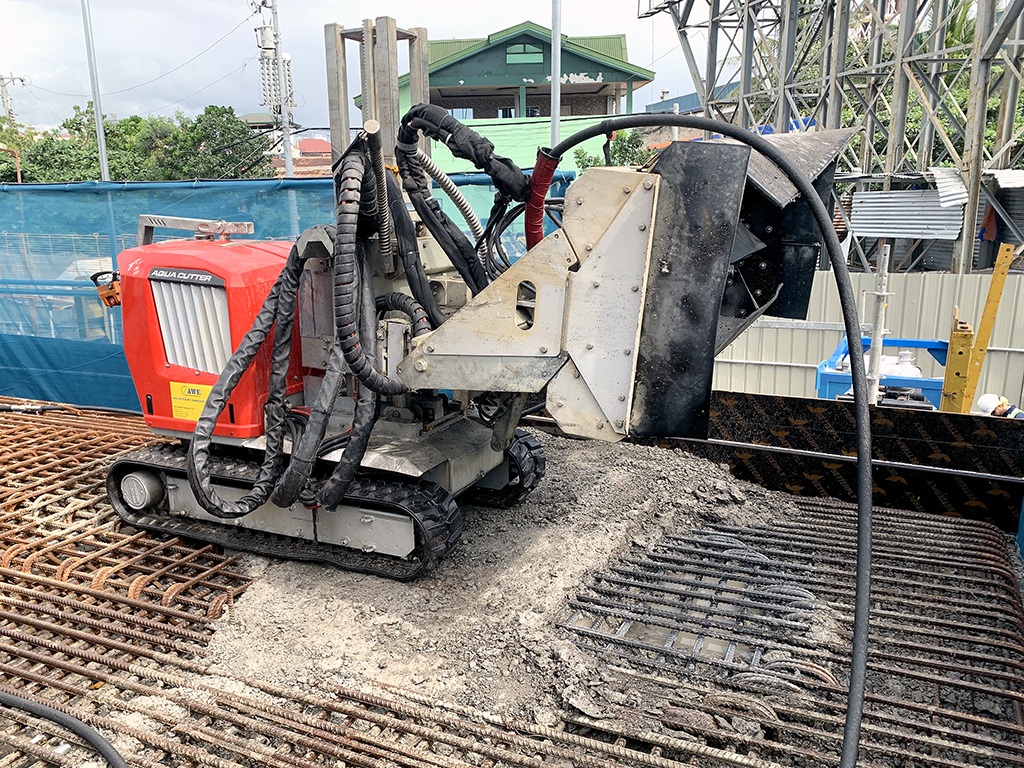
Come le betoniere, anche l’Aqua Cutter e tutte le attrezzature di supporto, tra cui una pompa ad alta pressione con pompa Jetstream serie 4200, dovevano accedere al cantiere dal Mactan Chanel. La vicinanza all’acqua e le frequenti e forti piogge della stagione dei monsoni hanno reso difficili le condizioni del terreno. Tuttavia, poiché l’Aqua Cutter è semovente con cingoli, il terreno irregolare e fangoso non ha creato problemi ad Asia Waterjet Equipment. Questo ha ridotto al minimo la preparazione del sito e ha contribuito ad accelerare le riparazioni.
 

No matter the project — from a simple structure to a massive, multi-million-dollar bridge system — efficient construction requires thorough planning. But, even with flawless logistics, projects can run into challenges that put deadlines in jeopardy. Construction is currently underway in the Philippines on a massive bridge system connecting Cebu City with Cordova on the southern end of Mactan Island. The 8.5-kilometer (5.3-mile) Cebu-Cordova Link Expressway, slated for completion in 2021, will span the Mactan Channel with 51-meter (167-feet) navigational clearance for shipping vessels. It promises to ease congestion between Cebu and Mactan and boost economic activities throughout the region by providing additional access to the island and the Mactan-Cebu International Airport for an estimated 50,000 vehicles a day. As expected, the construction — one of the largest infrastructure projects in the country — relies on a carefully choreographed plan of simultaneous operations to meet strict deadlines. Expert logistics allow crews to avoid many hurdles; however, unforeseen challenges can still arise. When a bad batch of concrete threatened to derail progress on one of the bridge’s first pilons, project managers needed a creative solution that could quickly remove the poor-quality concrete without damaging the rebar or putting the project behind schedule. Hydrodemolition was the only process with the precision and productivity to keep the project on track. Cebu Link Joint Venture (CLJV) contacted Singapore-based Asia Waterjet Equipment, the region’s premier Hydrodemolition experts. Access and site conditions presented quite a challenge, but with decades of experience in some of the most hazardous applications, Asia Waterjet Equipment was more than up to the task. With the clock ticking and monsoon season in full swing, the team arrived onsite with an Aquajet Aqua Cutter 710V Hydrodemolition robot and Jetstream HP Waterjetting Pump. Passion for Problem Solving In the early 1990s, Asia Waterjet Equipment’s founders were part of the brave crews tasked with containing oil wells in Kuwait that were destroyed during the Persian Gulf War. Their experience helped avert a huge environmental crisis. They remained in the Middle East, eventually founding Asia Waterjet Equipment in 2006, bringing high-pressure water jetting and robotic Hydrodemolition to the Middle East and South East Asia. Now, with offices in Dubai, Abu Dhabi, Saudi Arabia, Bahrain and Singapore and a strong presence and partnerships throughout these territories, the company is known for creative problem solving — delivering innovative cutting and cleaning solutions for hazardous areas or difficult to pump products in petrochemical, wastewater, mining, construction and other industries. They also offer a range of robotic solutions to help customers protect employees and perform beyond expectations. “Our focus has always been providing the cutting-edge tools to make challenging applications safer and more efficient,” said Chris Parkhill, Asia Waterjet Equipment Sales Director for Southeast Asia. “From the very beginning, we’ve been involved in some of the most hazardous operations out there. We understand the demands and dangers, which is why we partner with industry-leading equipment manufacturers for robust solutions that maximize safety and productivity.” Pairing the right tools with experienced team members who bring a wealth of industry knowledge and a deep understanding of local markets to each project has earned Asia Waterjet Equipment a reputation for high-quality results. In emerging markets, such as the Philippines, where the demands of multi-million-dollar projects have become a proving ground for newer, more efficient technologies, this expertise puts the company at the forefront. “From North Africa to South East Asia, we cover a lot of ground,” Parkhill said. “But being able to meet the contractor where they are is key to a successful solution. Working with CLJV, there were a number of challenges we had to overcome to keep the project on track. Hydrodemolition was the best solution and Aquajet was the best tool for the job.” Troubled Water Access was the primary problem. CLJV was conducting construction on several bridge pilons simultaneously. To minimize disruptions to the local community, the project’s primary staging area, as well as the initial pilon, were only accessible from the coast. This meant the concrete had to be mixed 2.5 kilometers (1.6 miles) down the coast then transported by barge to the jobsite. From there, the barge was grounded, and the trucks disembarked directly onto the beach. The pilon was 30 meters (98 feet) inland. Overall, the transportation delay had no negative impacts on the concrete, and the 16-by-14-meter (52.5-by-45.9-foot) pilon quickly grew to 4 meters (13 feet) tall. However, a complication with a single delivery threatened to throw the entire project behind schedule and over budget. “When you are working with concrete, sometimes things don’t go to plan,” Parkhill said. “It’s a delicate equation, after all, and even a slight miscalculation can ruin the mixture. Unfortunately, when that happens, there isn’t an easy fix.” Crews knew there was a problem immediately. The concrete was already setting as they pumped. Vibrating and other correctional methods failed, and the pour was ultimately unsuccessful. Even worse, the concrete fell 350 millimeters (13.8 inches) short, leaving a mesh of exposed rebar. For CLJV and Asia Waterjet Equipment, the challenges were adding up, making for a very difficult repair. The pilon was nearly complete. While CLJV had budgeted time and money for small complications, it could not afford to demolish the whole pilon and start over. Crews with handheld breakers or excavators could remove the poor-quality concrete, but only by destroying the rebar. They would have to cut the exposed rebar at the top of the pilon to access the concrete a foot below. More rebar would be damaged as the poor-quality concrete was removed, and microfractures from the vibration of jackhammers or excavators would weaken the remaining concrete, jeopardizing the pilon’s integrity. “There was no option; the rebar and existing good concrete had to be protected,” Parkhill said. “If CLJV went with traditional demolition methods, they’d have to open, pry apart where possible or cut the rebar and manually jack hammer out the bad concrete. There’s no guarantee a man using a jack hammer could gauge what’s good and what’s bad, so they’d end up removing extra. Then they’d have to bend the rebar back into place without breaking it, or weld or cut new threads and join with it threaded couplers. It would add weeks to the project and a significant cost to the budget. They simply couldn’t afford it.” Asia Waterjet Equipment knew Hydrodemolition was the only solution. The non-intrusive method uses high-pressure water jets as powerful as 40,000 psi manipulated by an automated robot to remove layers of deteriorated and damaged concrete. The high-pressure water exceeds the strength of the concrete to widen existing pores and microcracks, breaking it apart in a controlled manner. Unlike other mechanical methods, Hydrodemolition is impact free, eliminating the vibrations that cause microfractures. Additionally, the method meets European Standards EN 1504 and provides a superior bonding surface for new concrete. The Aqua Cutter 710V’s high-pressure water jet leaves a rough, irregular profile after removing the initial layer of concrete that results in a better bonding strength. The robot also cleans and descales the exposed rebar and removes non-visible contaminants such as dirt, mud, foundation mud, salts, chlorides and sulfates. Building Bridges Productivity was also a concern. With simultaneous construction continuing on several other pilons in the area, crews needed to remove the poor-quality concrete and complete repairs quickly — with minimal labor. With the ability to complete concrete removal tasks up to 25 times faster than a hand lance, the Aqua Cutter provided the necessary solution to keep the project on schedule. Asia Waterjet Equipment brought in Aquajet Special Application Manager Kjell Isaksson to support the operation. “There were a lot of variables and no room for error,” Parkhill said. “To minimize the risk of delays, we decided it would be best to have an Aquajet specialist on site.” Like the cement trucks, the Aqua Cutter and all support equipment, including a high-pressure waterjet power pack with a 4200 series Jetstream pump, had to access the site from the Mactan Chanel. Proximity to the water and the frequent, heavy rains of monsoon season made ground conditions difficult. However, since the Aqua Cutter is self-propelled with tracks, the uneven, muddy terrain presented no problems for Asia Waterjet Equipment. This minimized necessary site preparations and helped accelerate repairs. Crossing the Bridge to Success This mobility was also necessary for tackling the demolition itself. Once lifted the 4 meters (13 feet) onto the pile cap by a crane, the Aqua Cutter was able to easily maneuver over the rebar. The high-pressure pump was setup 7 meters (23 feet) away and connected to the Hydrodemolition robot by a high-pressure hose. To help reduce cost and increase production, Asia Waterjet Equipment opted to use seawater for the majority of the demolition rather than bring in fresh water. The company continually filled two 20-cubic meter (5,283 gallon) night tanks directly from the Mactan Chanel. Fresh water was only used during the last two days of the project to remove salt and other impurities that could impact bonding. Using the Hydrodemolition robot, operating at 1,000 bar (15,000 psi), and two employees, Asia Waterjet Equipment removed 10 cubic meters (13 cubic yards) of poor-quality concrete at a depth of 150-250 millimeters (6-10 inches) in days. “With the Aquajet Aqua Cutter, we increased productivity to a point where construction was back on schedule,” Parkhill said. “Without Hydrodemolition, there’s no way CLJV would have been able to do that.” The Future of Hydrodemolition While construction on the bridge system continues, Asia Waterjet Equipment is already on to the next challenge. “Construction in Southeast Asia is changing,” Parkhill said. “Robotic processes like Hydrodemolition are proving you can have productivity and safety. With innovative partners like Aquajet, Asia Waterjet Equipment is playing a leading role in facilitating that change.”

Il terreno irregolare e fangoso del cantiere non ha creato problemi all’Aqua Cutter semovente. Questo ha ridotto al minimo i preparativi necessari in cantiere e ha contribuito ad accelerare le riparazioni.

Attraversare il ponte del successo

Questa mobilità era necessaria anche per affrontare la demolizione stessa. Una volta sollevato da una gru per 4 metri (13 piedi) sulla calotta della pila, l’Aqua Cutter è stato in grado di manovrare facilmente sopra l’armatura. La pompa ad alta pressione è stata posizionata a 7 metri di distanza e collegata al robot per idrodemolizione con un tubo flessibile ad alta pressione.

Per ridurre i costi e aumentare la produzione, Asia Waterjet Equipment ha scelto di utilizzare l’acqua di mare per la maggior parte della demolizione invece di portare acqua dolce. L’azienda ha riempito continuamente due serbatoi notturni da 20 metri cubi (5.283 galloni) direttamente dal Mactan Chanel. L’acqua dolce è stata utilizzata solo negli ultimi due giorni del progetto per rimuovere il sale e altre impurità che avrebbero potuto influire sull’incollaggio.

Utilizzando il robot Hydrodemolizione, che opera a 1.000 bar (15.000 psi), e due dipendenti, Asia Waterjet Equipment ha rimosso 10 metri cubi (13 iarde cubiche) di calcestruzzo di scarsa qualità a una profondità di 150-250 millimetri (6-10 pollici) in pochi giorni.

“Con l’Aquajet Aqua Cutter, abbiamo aumentato la produttività al punto che la costruzione è tornata nei tempi previsti”, ha dichiarato Parkhill. “Senza l’idrodemolizione, CLJV non sarebbe stata in grado di farlo”.
 

No matter the project — from a simple structure to a massive, multi-million-dollar bridge system — efficient construction requires thorough planning. But, even with flawless logistics, projects can run into challenges that put deadlines in jeopardy. Construction is currently underway in the Philippines on a massive bridge system connecting Cebu City with Cordova on the southern end of Mactan Island. The 8.5-kilometer (5.3-mile) Cebu-Cordova Link Expressway, slated for completion in 2021, will span the Mactan Channel with 51-meter (167-feet) navigational clearance for shipping vessels. It promises to ease congestion between Cebu and Mactan and boost economic activities throughout the region by providing additional access to the island and the Mactan-Cebu International Airport for an estimated 50,000 vehicles a day. As expected, the construction — one of the largest infrastructure projects in the country — relies on a carefully choreographed plan of simultaneous operations to meet strict deadlines. Expert logistics allow crews to avoid many hurdles; however, unforeseen challenges can still arise. When a bad batch of concrete threatened to derail progress on one of the bridge’s first pilons, project managers needed a creative solution that could quickly remove the poor-quality concrete without damaging the rebar or putting the project behind schedule. Hydrodemolition was the only process with the precision and productivity to keep the project on track. Cebu Link Joint Venture (CLJV) contacted Singapore-based Asia Waterjet Equipment, the region’s premier Hydrodemolition experts. Access and site conditions presented quite a challenge, but with decades of experience in some of the most hazardous applications, Asia Waterjet Equipment was more than up to the task. With the clock ticking and monsoon season in full swing, the team arrived onsite with an Aquajet Aqua Cutter 710V Hydrodemolition robot and Jetstream HP Waterjetting Pump. Passion for Problem Solving In the early 1990s, Asia Waterjet Equipment’s founders were part of the brave crews tasked with containing oil wells in Kuwait that were destroyed during the Persian Gulf War. Their experience helped avert a huge environmental crisis. They remained in the Middle East, eventually founding Asia Waterjet Equipment in 2006, bringing high-pressure water jetting and robotic Hydrodemolition to the Middle East and South East Asia. Now, with offices in Dubai, Abu Dhabi, Saudi Arabia, Bahrain and Singapore and a strong presence and partnerships throughout these territories, the company is known for creative problem solving — delivering innovative cutting and cleaning solutions for hazardous areas or difficult to pump products in petrochemical, wastewater, mining, construction and other industries. They also offer a range of robotic solutions to help customers protect employees and perform beyond expectations. “Our focus has always been providing the cutting-edge tools to make challenging applications safer and more efficient,” said Chris Parkhill, Asia Waterjet Equipment Sales Director for Southeast Asia. “From the very beginning, we’ve been involved in some of the most hazardous operations out there. We understand the demands and dangers, which is why we partner with industry-leading equipment manufacturers for robust solutions that maximize safety and productivity.” Pairing the right tools with experienced team members who bring a wealth of industry knowledge and a deep understanding of local markets to each project has earned Asia Waterjet Equipment a reputation for high-quality results. In emerging markets, such as the Philippines, where the demands of multi-million-dollar projects have become a proving ground for newer, more efficient technologies, this expertise puts the company at the forefront. “From North Africa to South East Asia, we cover a lot of ground,” Parkhill said. “But being able to meet the contractor where they are is key to a successful solution. Working with CLJV, there were a number of challenges we had to overcome to keep the project on track. Hydrodemolition was the best solution and Aquajet was the best tool for the job.” Troubled Water Access was the primary problem. CLJV was conducting construction on several bridge pilons simultaneously. To minimize disruptions to the local community, the project’s primary staging area, as well as the initial pilon, were only accessible from the coast. This meant the concrete had to be mixed 2.5 kilometers (1.6 miles) down the coast then transported by barge to the jobsite. From there, the barge was grounded, and the trucks disembarked directly onto the beach. The pilon was 30 meters (98 feet) inland. Overall, the transportation delay had no negative impacts on the concrete, and the 16-by-14-meter (52.5-by-45.9-foot) pilon quickly grew to 4 meters (13 feet) tall. However, a complication with a single delivery threatened to throw the entire project behind schedule and over budget. “When you are working with concrete, sometimes things don’t go to plan,” Parkhill said. “It’s a delicate equation, after all, and even a slight miscalculation can ruin the mixture. Unfortunately, when that happens, there isn’t an easy fix.” Crews knew there was a problem immediately. The concrete was already setting as they pumped. Vibrating and other correctional methods failed, and the pour was ultimately unsuccessful. Even worse, the concrete fell 350 millimeters (13.8 inches) short, leaving a mesh of exposed rebar. For CLJV and Asia Waterjet Equipment, the challenges were adding up, making for a very difficult repair. The pilon was nearly complete. While CLJV had budgeted time and money for small complications, it could not afford to demolish the whole pilon and start over. Crews with handheld breakers or excavators could remove the poor-quality concrete, but only by destroying the rebar. They would have to cut the exposed rebar at the top of the pilon to access the concrete a foot below. More rebar would be damaged as the poor-quality concrete was removed, and microfractures from the vibration of jackhammers or excavators would weaken the remaining concrete, jeopardizing the pilon’s integrity. “There was no option; the rebar and existing good concrete had to be protected,” Parkhill said. “If CLJV went with traditional demolition methods, they’d have to open, pry apart where possible or cut the rebar and manually jack hammer out the bad concrete. There’s no guarantee a man using a jack hammer could gauge what’s good and what’s bad, so they’d end up removing extra. Then they’d have to bend the rebar back into place without breaking it, or weld or cut new threads and join with it threaded couplers. It would add weeks to the project and a significant cost to the budget. They simply couldn’t afford it.” Asia Waterjet Equipment knew Hydrodemolition was the only solution. The non-intrusive method uses high-pressure water jets as powerful as 40,000 psi manipulated by an automated robot to remove layers of deteriorated and damaged concrete. The high-pressure water exceeds the strength of the concrete to widen existing pores and microcracks, breaking it apart in a controlled manner. Unlike other mechanical methods, Hydrodemolition is impact free, eliminating the vibrations that cause microfractures. Additionally, the method meets European Standards EN 1504 and provides a superior bonding surface for new concrete. The Aqua Cutter 710V’s high-pressure water jet leaves a rough, irregular profile after removing the initial layer of concrete that results in a better bonding strength. The robot also cleans and descales the exposed rebar and removes non-visible contaminants such as dirt, mud, foundation mud, salts, chlorides and sulfates. Building Bridges Productivity was also a concern. With simultaneous construction continuing on several other pilons in the area, crews needed to remove the poor-quality concrete and complete repairs quickly — with minimal labor. With the ability to complete concrete removal tasks up to 25 times faster than a hand lance, the Aqua Cutter provided the necessary solution to keep the project on schedule. Asia Waterjet Equipment brought in Aquajet Special Application Manager Kjell Isaksson to support the operation. “There were a lot of variables and no room for error,” Parkhill said. “To minimize the risk of delays, we decided it would be best to have an Aquajet specialist on site.” Like the cement trucks, the Aqua Cutter and all support equipment, including a high-pressure waterjet power pack with a 4200 series Jetstream pump, had to access the site from the Mactan Chanel. Proximity to the water and the frequent, heavy rains of monsoon season made ground conditions difficult. However, since the Aqua Cutter is self-propelled with tracks, the uneven, muddy terrain presented no problems for Asia Waterjet Equipment. This minimized necessary site preparations and helped accelerate repairs. Crossing the Bridge to Success This mobility was also necessary for tackling the demolition itself. Once lifted the 4 meters (13 feet) onto the pile cap by a crane, the Aqua Cutter was able to easily maneuver over the rebar. The high-pressure pump was setup 7 meters (23 feet) away and connected to the Hydrodemolition robot by a high-pressure hose. To help reduce cost and increase production, Asia Waterjet Equipment opted to use seawater for the majority of the demolition rather than bring in fresh water. The company continually filled two 20-cubic meter (5,283 gallon) night tanks directly from the Mactan Chanel. Fresh water was only used during the last two days of the project to remove salt and other impurities that could impact bonding. Using the Hydrodemolition robot, operating at 1,000 bar (15,000 psi), and two employees, Asia Waterjet Equipment removed 10 cubic meters (13 cubic yards) of poor-quality concrete at a depth of 150-250 millimeters (6-10 inches) in days. “With the Aquajet Aqua Cutter, we increased productivity to a point where construction was back on schedule,” Parkhill said. “Without Hydrodemolition, there’s no way CLJV would have been able to do that.” The Future of Hydrodemolition While construction on the bridge system continues, Asia Waterjet Equipment is already on to the next challenge. “Construction in Southeast Asia is changing,” Parkhill said. “Robotic processes like Hydrodemolition are proving you can have productivity and safety. With innovative partners like Aquajet, Asia Waterjet Equipment is playing a leading role in facilitating that change.”

Utilizzando il robot Hydrodemolizione, che opera a 1.000 bar (15.000 psi), e due dipendenti, Asia Waterjet Equipment ha rimosso 10 metri cubi (13 iarde cubiche) di calcestruzzo di scarsa qualità a una profondità di 150-250 millimetri (6-10 pollici).


Il futuro dell’idrodemolizione

Mentre la costruzione del sistema a ponte continua, Asia Waterjet Equipment è già impegnata nella prossima sfida.

“L’edilizia nel sud-est asiatico sta cambiando”, ha dichiarato Parkhill. “I processi robotizzati come l’idrodemolizione stanno dimostrando che è possibile avere produttività e sicurezza. Con partner innovativi come Aquajet, Asia Waterjet Equipment sta svolgendo un ruolo di primo piano nel favorire questo cambiamento”.


Fatti brevi

Posizione:
Un imponente sistema di ponti che collega Cebu City a Cordova, all’estremità meridionale dell’isola di Mactan, nelle Filippine.

Progetto ponte:
La Cebu-Cordova Link Expressway, lunga 8,5 km e che dovrebbe essere completata nel 2021, attraverserà il Canale di Mactan con una distanza di 51 metri (167 piedi) per la navigazione delle navi.

Progetto di idrodemolizione:
Rimozione selettiva del calcestruzzo di scarsa qualità senza danneggiare le armature e senza ritardare il progetto.

Materiale demolito:
10 metri cubi di cemento di scarsa qualità a una profondità di 150-250 millimetri (6-10 pollici).

Attrezzatura: Aqua Cutter 710V.


Ulteriori informazioni

Aqua Cutter 710V

Idrodemolizione

Rete globale di rivenditori Aquajet


pdf stampabile

Aquajet On location – L’innovativa soluzione robotica di Aquajet garantisce la produttività del progetto di un ponte nelle Filippine