
Vattenbilning ökar produktiviteten på ett broprojekt i Filippinerna


Oavsett vilket projekt det gäller – från en enkel struktur till ett massivt brosystem för flera miljoner dollar – kräver ett effektivt byggande noggrann planering. Men även med en felfri logistik kan projekten stöta på utmaningar som äventyrar deadlines.


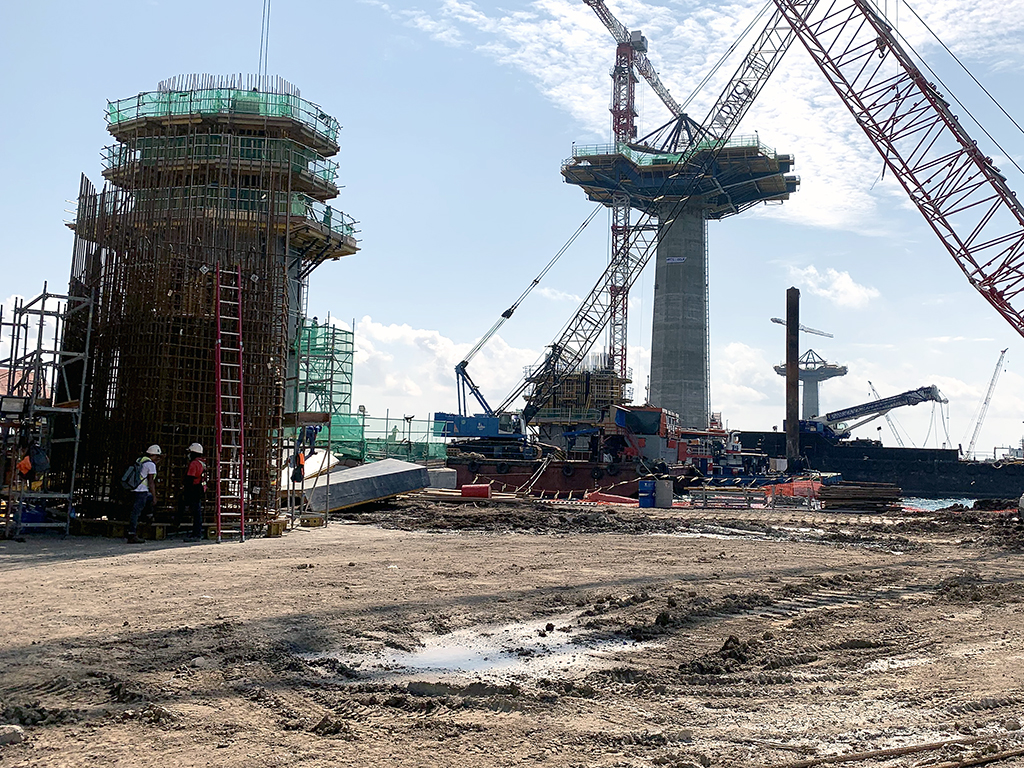
I Filippinerna pågår för närvarande byggandet av ett massivt brosystem som förbinder Cebu City med Cordova på den södra delen av ön Mactan. Den 8,5 kilometer långa expressvägen Cebu-Cordova Link Expressway, som beräknas vara klar 2021, kommer att gå över Mactan-kanalen med 51 meters (167 fötter) navigationsfrihet för fartyg. Den kommer att minska trafikstockningarna mellan Cebu och Mactan och främja den ekonomiska aktiviteten i hela regionen genom att ge ytterligare tillgång till ön och Mactan-Cebus internationella flygplats för uppskattningsvis 50.000 fordon per dag.

Som väntat är bygget – ett av de största infrastrukturprojekten i landet – beroende av en noggrant koreograferad plan för samtidiga operationer för att hålla strikta tidsfrister. Tack vare skicklig logistik kan byggarbetarna undvika många hinder, men oförutsedda utmaningar kan ändå uppstå. När ett dåligt parti betong hotade att stoppa arbetet med en av brons första pelare behövde projektledarna en kreativ lösning som snabbt kunde avlägsna den dåliga betongen utan att skada armeringen eller försena projektet. Vattenbilning var den enda process som hade den precision och produktivitet som krävdes för att hålla projektet på rätt spår.

Cebu Link Joint Venture (CLJV) kontaktade Singapore-baserade Asia Waterjet Equipment, regionens främsta experter på vattenbilning. Tillträdet och förhållandena på platsen var en utmaning, men med decennier av erfarenhet av några av de farligaste tillämpningarna var Asia Waterjet Equipment mer än redo för uppgiften. Med klockan tickande och monsunsäsongen i full gång anlände teamet till platsen med en Aqua Cutter 710V vattenbilningspump och en Jetstream HP vattenjetningspump.
 

No matter the project — from a simple structure to a massive, multi-million-dollar bridge system — efficient construction requires thorough planning. But, even with flawless logistics, projects can run into challenges that put deadlines in jeopardy. Construction is currently underway in the Philippines on a massive bridge system connecting Cebu City with Cordova on the southern end of Mactan Island. The 8.5-kilometer (5.3-mile) Cebu-Cordova Link Expressway, slated for completion in 2021, will span the Mactan Channel with 51-meter (167-feet) navigational clearance for shipping vessels. It promises to ease congestion between Cebu and Mactan and boost economic activities throughout the region by providing additional access to the island and the Mactan-Cebu International Airport for an estimated 50,000 vehicles a day. As expected, the construction — one of the largest infrastructure projects in the country — relies on a carefully choreographed plan of simultaneous operations to meet strict deadlines. Expert logistics allow crews to avoid many hurdles; however, unforeseen challenges can still arise. When a bad batch of concrete threatened to derail progress on one of the bridge’s first pilons, project managers needed a creative solution that could quickly remove the poor-quality concrete without damaging the rebar or putting the project behind schedule. Hydrodemolition was the only process with the precision and productivity to keep the project on track. Cebu Link Joint Venture (CLJV) contacted Singapore-based Asia Waterjet Equipment, the region’s premier Hydrodemolition experts. Access and site conditions presented quite a challenge, but with decades of experience in some of the most hazardous applications, Asia Waterjet Equipment was more than up to the task. With the clock ticking and monsoon season in full swing, the team arrived onsite with an Aquajet Aqua Cutter 710V Hydrodemolition robot and Jetstream HP Waterjetting Pump. Passion for Problem Solving In the early 1990s, Asia Waterjet Equipment’s founders were part of the brave crews tasked with containing oil wells in Kuwait that were destroyed during the Persian Gulf War. Their experience helped avert a huge environmental crisis. They remained in the Middle East, eventually founding Asia Waterjet Equipment in 2006, bringing high-pressure water jetting and robotic Hydrodemolition to the Middle East and South East Asia. Now, with offices in Dubai, Abu Dhabi, Saudi Arabia, Bahrain and Singapore and a strong presence and partnerships throughout these territories, the company is known for creative problem solving — delivering innovative cutting and cleaning solutions for hazardous areas or difficult to pump products in petrochemical, wastewater, mining, construction and other industries. They also offer a range of robotic solutions to help customers protect employees and perform beyond expectations. “Our focus has always been providing the cutting-edge tools to make challenging applications safer and more efficient,” said Chris Parkhill, Asia Waterjet Equipment Sales Director for Southeast Asia. “From the very beginning, we’ve been involved in some of the most hazardous operations out there. We understand the demands and dangers, which is why we partner with industry-leading equipment manufacturers for robust solutions that maximize safety and productivity.” Pairing the right tools with experienced team members who bring a wealth of industry knowledge and a deep understanding of local markets to each project has earned Asia Waterjet Equipment a reputation for high-quality results. In emerging markets, such as the Philippines, where the demands of multi-million-dollar projects have become a proving ground for newer, more efficient technologies, this expertise puts the company at the forefront. “From North Africa to South East Asia, we cover a lot of ground,” Parkhill said. “But being able to meet the contractor where they are is key to a successful solution. Working with CLJV, there were a number of challenges we had to overcome to keep the project on track. Hydrodemolition was the best solution and Aquajet was the best tool for the job.” Troubled Water Access was the primary problem. CLJV was conducting construction on several bridge pilons simultaneously. To minimize disruptions to the local community, the project’s primary staging area, as well as the initial pilon, were only accessible from the coast. This meant the concrete had to be mixed 2.5 kilometers (1.6 miles) down the coast then transported by barge to the jobsite. From there, the barge was grounded, and the trucks disembarked directly onto the beach. The pilon was 30 meters (98 feet) inland. Overall, the transportation delay had no negative impacts on the concrete, and the 16-by-14-meter (52.5-by-45.9-foot) pilon quickly grew to 4 meters (13 feet) tall. However, a complication with a single delivery threatened to throw the entire project behind schedule and over budget. “When you are working with concrete, sometimes things don’t go to plan,” Parkhill said. “It’s a delicate equation, after all, and even a slight miscalculation can ruin the mixture. Unfortunately, when that happens, there isn’t an easy fix.” Crews knew there was a problem immediately. The concrete was already setting as they pumped. Vibrating and other correctional methods failed, and the pour was ultimately unsuccessful. Even worse, the concrete fell 350 millimeters (13.8 inches) short, leaving a mesh of exposed rebar. For CLJV and Asia Waterjet Equipment, the challenges were adding up, making for a very difficult repair. The pilon was nearly complete. While CLJV had budgeted time and money for small complications, it could not afford to demolish the whole pilon and start over. Crews with handheld breakers or excavators could remove the poor-quality concrete, but only by destroying the rebar. They would have to cut the exposed rebar at the top of the pilon to access the concrete a foot below. More rebar would be damaged as the poor-quality concrete was removed, and microfractures from the vibration of jackhammers or excavators would weaken the remaining concrete, jeopardizing the pilon’s integrity. “There was no option; the rebar and existing good concrete had to be protected,” Parkhill said. “If CLJV went with traditional demolition methods, they’d have to open, pry apart where possible or cut the rebar and manually jack hammer out the bad concrete. There’s no guarantee a man using a jack hammer could gauge what’s good and what’s bad, so they’d end up removing extra. Then they’d have to bend the rebar back into place without breaking it, or weld or cut new threads and join with it threaded couplers. It would add weeks to the project and a significant cost to the budget. They simply couldn’t afford it.” Asia Waterjet Equipment knew Hydrodemolition was the only solution. The non-intrusive method uses high-pressure water jets as powerful as 40,000 psi manipulated by an automated robot to remove layers of deteriorated and damaged concrete. The high-pressure water exceeds the strength of the concrete to widen existing pores and microcracks, breaking it apart in a controlled manner. Unlike other mechanical methods, Hydrodemolition is impact free, eliminating the vibrations that cause microfractures. Additionally, the method meets European Standards EN 1504 and provides a superior bonding surface for new concrete. The Aqua Cutter 710V’s high-pressure water jet leaves a rough, irregular profile after removing the initial layer of concrete that results in a better bonding strength. The robot also cleans and descales the exposed rebar and removes non-visible contaminants such as dirt, mud, foundation mud, salts, chlorides and sulfates. Building Bridges Productivity was also a concern. With simultaneous construction continuing on several other pilons in the area, crews needed to remove the poor-quality concrete and complete repairs quickly — with minimal labor. With the ability to complete concrete removal tasks up to 25 times faster than a hand lance, the Aqua Cutter provided the necessary solution to keep the project on schedule. Asia Waterjet Equipment brought in Aquajet Special Application Manager Kjell Isaksson to support the operation. “There were a lot of variables and no room for error,” Parkhill said. “To minimize the risk of delays, we decided it would be best to have an Aquajet specialist on site.” Like the cement trucks, the Aqua Cutter and all support equipment, including a high-pressure waterjet power pack with a 4200 series Jetstream pump, had to access the site from the Mactan Chanel. Proximity to the water and the frequent, heavy rains of monsoon season made ground conditions difficult. However, since the Aqua Cutter is self-propelled with tracks, the uneven, muddy terrain presented no problems for Asia Waterjet Equipment. This minimized necessary site preparations and helped accelerate repairs. Crossing the Bridge to Success This mobility was also necessary for tackling the demolition itself. Once lifted the 4 meters (13 feet) onto the pile cap by a crane, the Aqua Cutter was able to easily maneuver over the rebar. The high-pressure pump was setup 7 meters (23 feet) away and connected to the Hydrodemolition robot by a high-pressure hose. To help reduce cost and increase production, Asia Waterjet Equipment opted to use seawater for the majority of the demolition rather than bring in fresh water. The company continually filled two 20-cubic meter (5,283 gallon) night tanks directly from the Mactan Chanel. Fresh water was only used during the last two days of the project to remove salt and other impurities that could impact bonding. Using the Hydrodemolition robot, operating at 1,000 bar (15,000 psi), and two employees, Asia Waterjet Equipment removed 10 cubic meters (13 cubic yards) of poor-quality concrete at a depth of 150-250 millimeters (6-10 inches) in days. “With the Aquajet Aqua Cutter, we increased productivity to a point where construction was back on schedule,” Parkhill said. “Without Hydrodemolition, there’s no way CLJV would have been able to do that.” The Future of Hydrodemolition While construction on the bridge system continues, Asia Waterjet Equipment is already on to the next challenge. “Construction in Southeast Asia is changing,” Parkhill said. “Robotic processes like Hydrodemolition are proving you can have productivity and safety. With innovative partners like Aquajet, Asia Waterjet Equipment is playing a leading role in facilitating that change.”

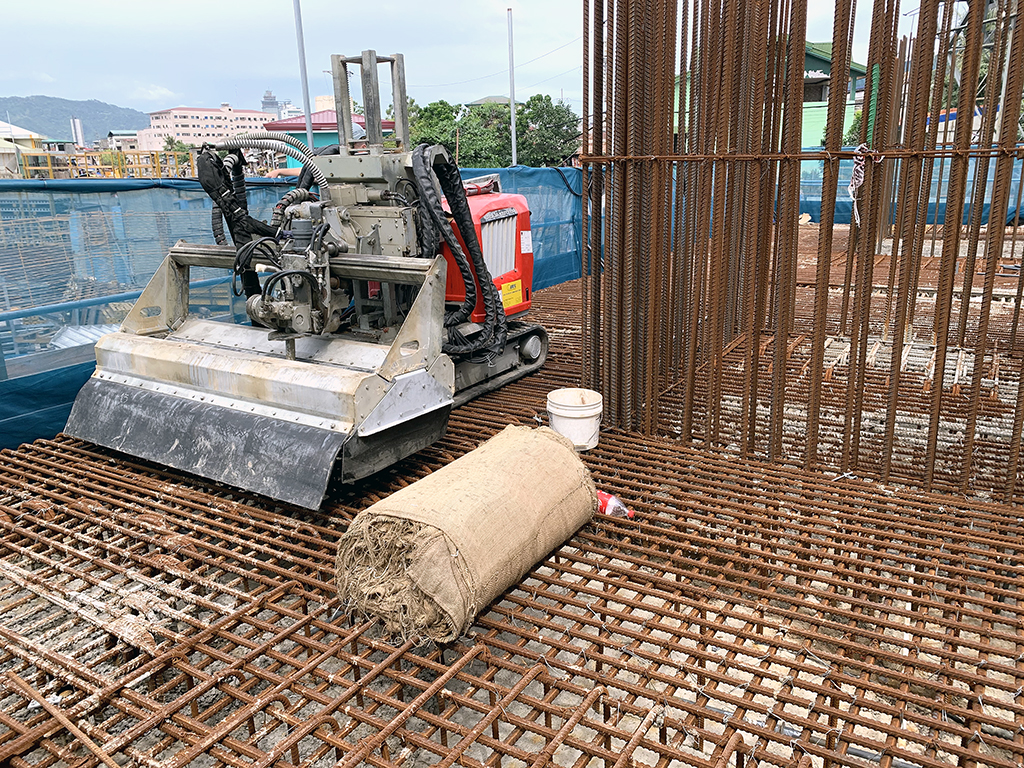
När en dålig sats betong hotade att få ett stort broprojekt i Filippinerna att spåra ur vände sig Asia Waterjet Equipment till Aquajet för att få en kreativ lösning som snabbt kunde avlägsna den dåliga betongen utan att skada armeringen eller försena projektet


Passion för problemlösning

I början av 1990-talet var Asia Waterjet Equipments grundare en del av de modiga besättningar som fick i uppdrag att begränsa oljekällor i Kuwait som förstördes under kriget i Persiska viken. Deras erfarenhet bidrog till att avvärja en enorm miljökris. De stannade kvar i Mellanöstern och grundade så småningom Asia Waterjet Equipment 2006, som erbjuder högtrycksvattenstråle och vattenbilning med robotar i Mellanöstern och Sydostasien.

Nu, med kontor i Dubai, Abu Dhabi, Saudiarabien, Bahrain och Singapore och en stark närvaro och partnerskap i alla dessa territorier, är företaget känt för kreativ problemlösning – och levererar innovativa skär- och rengöringslösningar för farliga områden eller svårpumpade produkter inom petrokemi, avloppsvatten, gruvdrift, bygg- och anläggningsindustri och andra branscher. De erbjuder också en rad robotlösningar som hjälper kunderna att skydda sina anställda och prestera över förväntan.

“Vårt fokus har alltid varit att tillhandahålla de senaste verktygen för att göra utmanande applikationer säkrare och mer effektiva”, säger Chris Parkhill, Asia Waterjet Equipment Sales Director för Sydostasien. “Redan från början har vi varit involverade i några av de farligaste arbetena som finns. Vi förstår kraven och farorna, och det är därför vi samarbetar med branschledande utrustningstillverkare för robusta lösningar som maximerar säkerheten och produktiviteten.”

Genom att kombinera rätt verktyg med erfarna teammedlemmar som bidrar med stor branschkunskap och en djup förståelse för lokala marknader till varje projekt har Asia Waterjet Equipment fått ett rykte om sig att leverera resultat av hög kvalitet. På tillväxtmarknader som Filippinerna, där kraven från mångmiljonprojekt har blivit ett testområde för nyare och effektivare teknik, gör denna expertis att företaget ligger i framkant.

“Vi täcker ett stort område, från Nordafrika till Sydostasien”, säger Parkhill. “Men att kunna möta entreprenören där de befinner sig är nyckeln till en framgångsrik lösning. I arbetet med CLJV fanns det ett antal utmaningar som vi var tvungna att övervinna för att hålla projektet på rätt spår. Vattenbilning var den bästa lösningen och Aquajet var det bästa verktyget för jobbet.”
 

No matter the project — from a simple structure to a massive, multi-million-dollar bridge system — efficient construction requires thorough planning. But, even with flawless logistics, projects can run into challenges that put deadlines in jeopardy. Construction is currently underway in the Philippines on a massive bridge system connecting Cebu City with Cordova on the southern end of Mactan Island. The 8.5-kilometer (5.3-mile) Cebu-Cordova Link Expressway, slated for completion in 2021, will span the Mactan Channel with 51-meter (167-feet) navigational clearance for shipping vessels. It promises to ease congestion between Cebu and Mactan and boost economic activities throughout the region by providing additional access to the island and the Mactan-Cebu International Airport for an estimated 50,000 vehicles a day. As expected, the construction — one of the largest infrastructure projects in the country — relies on a carefully choreographed plan of simultaneous operations to meet strict deadlines. Expert logistics allow crews to avoid many hurdles; however, unforeseen challenges can still arise. When a bad batch of concrete threatened to derail progress on one of the bridge’s first pilons, project managers needed a creative solution that could quickly remove the poor-quality concrete without damaging the rebar or putting the project behind schedule. Hydrodemolition was the only process with the precision and productivity to keep the project on track. Cebu Link Joint Venture (CLJV) contacted Singapore-based Asia Waterjet Equipment, the region’s premier Hydrodemolition experts. Access and site conditions presented quite a challenge, but with decades of experience in some of the most hazardous applications, Asia Waterjet Equipment was more than up to the task. With the clock ticking and monsoon season in full swing, the team arrived onsite with an Aquajet Aqua Cutter 710V Hydrodemolition robot and Jetstream HP Waterjetting Pump. Passion for Problem Solving In the early 1990s, Asia Waterjet Equipment’s founders were part of the brave crews tasked with containing oil wells in Kuwait that were destroyed during the Persian Gulf War. Their experience helped avert a huge environmental crisis. They remained in the Middle East, eventually founding Asia Waterjet Equipment in 2006, bringing high-pressure water jetting and robotic Hydrodemolition to the Middle East and South East Asia. Now, with offices in Dubai, Abu Dhabi, Saudi Arabia, Bahrain and Singapore and a strong presence and partnerships throughout these territories, the company is known for creative problem solving — delivering innovative cutting and cleaning solutions for hazardous areas or difficult to pump products in petrochemical, wastewater, mining, construction and other industries. They also offer a range of robotic solutions to help customers protect employees and perform beyond expectations. “Our focus has always been providing the cutting-edge tools to make challenging applications safer and more efficient,” said Chris Parkhill, Asia Waterjet Equipment Sales Director for Southeast Asia. “From the very beginning, we’ve been involved in some of the most hazardous operations out there. We understand the demands and dangers, which is why we partner with industry-leading equipment manufacturers for robust solutions that maximize safety and productivity.” Pairing the right tools with experienced team members who bring a wealth of industry knowledge and a deep understanding of local markets to each project has earned Asia Waterjet Equipment a reputation for high-quality results. In emerging markets, such as the Philippines, where the demands of multi-million-dollar projects have become a proving ground for newer, more efficient technologies, this expertise puts the company at the forefront. “From North Africa to South East Asia, we cover a lot of ground,” Parkhill said. “But being able to meet the contractor where they are is key to a successful solution. Working with CLJV, there were a number of challenges we had to overcome to keep the project on track. Hydrodemolition was the best solution and Aquajet was the best tool for the job.” Troubled Water Access was the primary problem. CLJV was conducting construction on several bridge pilons simultaneously. To minimize disruptions to the local community, the project’s primary staging area, as well as the initial pilon, were only accessible from the coast. This meant the concrete had to be mixed 2.5 kilometers (1.6 miles) down the coast then transported by barge to the jobsite. From there, the barge was grounded, and the trucks disembarked directly onto the beach. The pilon was 30 meters (98 feet) inland. Overall, the transportation delay had no negative impacts on the concrete, and the 16-by-14-meter (52.5-by-45.9-foot) pilon quickly grew to 4 meters (13 feet) tall. However, a complication with a single delivery threatened to throw the entire project behind schedule and over budget. “When you are working with concrete, sometimes things don’t go to plan,” Parkhill said. “It’s a delicate equation, after all, and even a slight miscalculation can ruin the mixture. Unfortunately, when that happens, there isn’t an easy fix.” Crews knew there was a problem immediately. The concrete was already setting as they pumped. Vibrating and other correctional methods failed, and the pour was ultimately unsuccessful. Even worse, the concrete fell 350 millimeters (13.8 inches) short, leaving a mesh of exposed rebar. For CLJV and Asia Waterjet Equipment, the challenges were adding up, making for a very difficult repair. The pilon was nearly complete. While CLJV had budgeted time and money for small complications, it could not afford to demolish the whole pilon and start over. Crews with handheld breakers or excavators could remove the poor-quality concrete, but only by destroying the rebar. They would have to cut the exposed rebar at the top of the pilon to access the concrete a foot below. More rebar would be damaged as the poor-quality concrete was removed, and microfractures from the vibration of jackhammers or excavators would weaken the remaining concrete, jeopardizing the pilon’s integrity. “There was no option; the rebar and existing good concrete had to be protected,” Parkhill said. “If CLJV went with traditional demolition methods, they’d have to open, pry apart where possible or cut the rebar and manually jack hammer out the bad concrete. There’s no guarantee a man using a jack hammer could gauge what’s good and what’s bad, so they’d end up removing extra. Then they’d have to bend the rebar back into place without breaking it, or weld or cut new threads and join with it threaded couplers. It would add weeks to the project and a significant cost to the budget. They simply couldn’t afford it.” Asia Waterjet Equipment knew Hydrodemolition was the only solution. The non-intrusive method uses high-pressure water jets as powerful as 40,000 psi manipulated by an automated robot to remove layers of deteriorated and damaged concrete. The high-pressure water exceeds the strength of the concrete to widen existing pores and microcracks, breaking it apart in a controlled manner. Unlike other mechanical methods, Hydrodemolition is impact free, eliminating the vibrations that cause microfractures. Additionally, the method meets European Standards EN 1504 and provides a superior bonding surface for new concrete. The Aqua Cutter 710V’s high-pressure water jet leaves a rough, irregular profile after removing the initial layer of concrete that results in a better bonding strength. The robot also cleans and descales the exposed rebar and removes non-visible contaminants such as dirt, mud, foundation mud, salts, chlorides and sulfates. Building Bridges Productivity was also a concern. With simultaneous construction continuing on several other pilons in the area, crews needed to remove the poor-quality concrete and complete repairs quickly — with minimal labor. With the ability to complete concrete removal tasks up to 25 times faster than a hand lance, the Aqua Cutter provided the necessary solution to keep the project on schedule. Asia Waterjet Equipment brought in Aquajet Special Application Manager Kjell Isaksson to support the operation. “There were a lot of variables and no room for error,” Parkhill said. “To minimize the risk of delays, we decided it would be best to have an Aquajet specialist on site.” Like the cement trucks, the Aqua Cutter and all support equipment, including a high-pressure waterjet power pack with a 4200 series Jetstream pump, had to access the site from the Mactan Chanel. Proximity to the water and the frequent, heavy rains of monsoon season made ground conditions difficult. However, since the Aqua Cutter is self-propelled with tracks, the uneven, muddy terrain presented no problems for Asia Waterjet Equipment. This minimized necessary site preparations and helped accelerate repairs. Crossing the Bridge to Success This mobility was also necessary for tackling the demolition itself. Once lifted the 4 meters (13 feet) onto the pile cap by a crane, the Aqua Cutter was able to easily maneuver over the rebar. The high-pressure pump was setup 7 meters (23 feet) away and connected to the Hydrodemolition robot by a high-pressure hose. To help reduce cost and increase production, Asia Waterjet Equipment opted to use seawater for the majority of the demolition rather than bring in fresh water. The company continually filled two 20-cubic meter (5,283 gallon) night tanks directly from the Mactan Chanel. Fresh water was only used during the last two days of the project to remove salt and other impurities that could impact bonding. Using the Hydrodemolition robot, operating at 1,000 bar (15,000 psi), and two employees, Asia Waterjet Equipment removed 10 cubic meters (13 cubic yards) of poor-quality concrete at a depth of 150-250 millimeters (6-10 inches) in days. “With the Aquajet Aqua Cutter, we increased productivity to a point where construction was back on schedule,” Parkhill said. “Without Hydrodemolition, there’s no way CLJV would have been able to do that.” The Future of Hydrodemolition While construction on the bridge system continues, Asia Waterjet Equipment is already on to the next challenge. “Construction in Southeast Asia is changing,” Parkhill said. “Robotic processes like Hydrodemolition are proving you can have productivity and safety. With innovative partners like Aquajet, Asia Waterjet Equipment is playing a leading role in facilitating that change.”

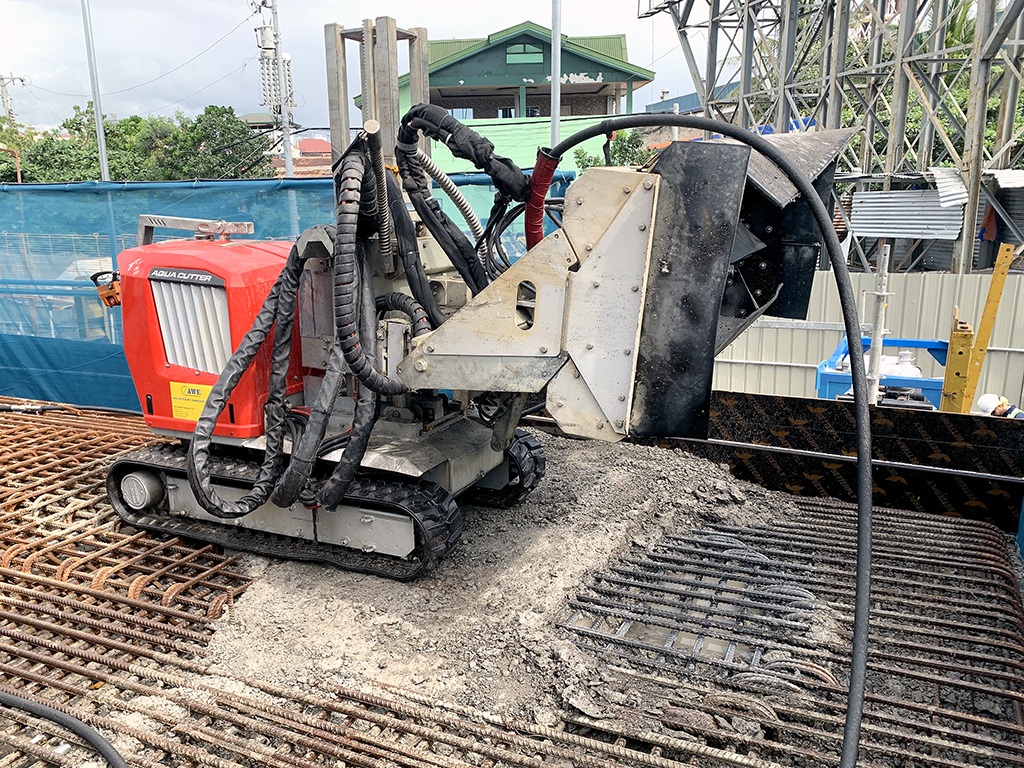
För att skydda armeringen och den befintliga goda betongen visste Asia Waterjet Equipment att vattenbilning var den enda lösningen. Den icke-invasiva metoden använder högtrycksvattenstrålar som är så kraftfulla som 40.000 psi och som manipuleras av en automatiserad robot för att avlägsna lager av skadad betong.
 

No matter the project — from a simple structure to a massive, multi-million-dollar bridge system — efficient construction requires thorough planning. But, even with flawless logistics, projects can run into challenges that put deadlines in jeopardy. Construction is currently underway in the Philippines on a massive bridge system connecting Cebu City with Cordova on the southern end of Mactan Island. The 8.5-kilometer (5.3-mile) Cebu-Cordova Link Expressway, slated for completion in 2021, will span the Mactan Channel with 51-meter (167-feet) navigational clearance for shipping vessels. It promises to ease congestion between Cebu and Mactan and boost economic activities throughout the region by providing additional access to the island and the Mactan-Cebu International Airport for an estimated 50,000 vehicles a day. As expected, the construction — one of the largest infrastructure projects in the country — relies on a carefully choreographed plan of simultaneous operations to meet strict deadlines. Expert logistics allow crews to avoid many hurdles; however, unforeseen challenges can still arise. When a bad batch of concrete threatened to derail progress on one of the bridge’s first pilons, project managers needed a creative solution that could quickly remove the poor-quality concrete without damaging the rebar or putting the project behind schedule. Hydrodemolition was the only process with the precision and productivity to keep the project on track. Cebu Link Joint Venture (CLJV) contacted Singapore-based Asia Waterjet Equipment, the region’s premier Hydrodemolition experts. Access and site conditions presented quite a challenge, but with decades of experience in some of the most hazardous applications, Asia Waterjet Equipment was more than up to the task. With the clock ticking and monsoon season in full swing, the team arrived onsite with an Aquajet Aqua Cutter 710V Hydrodemolition robot and Jetstream HP Waterjetting Pump. Passion for Problem Solving In the early 1990s, Asia Waterjet Equipment’s founders were part of the brave crews tasked with containing oil wells in Kuwait that were destroyed during the Persian Gulf War. Their experience helped avert a huge environmental crisis. They remained in the Middle East, eventually founding Asia Waterjet Equipment in 2006, bringing high-pressure water jetting and robotic Hydrodemolition to the Middle East and South East Asia. Now, with offices in Dubai, Abu Dhabi, Saudi Arabia, Bahrain and Singapore and a strong presence and partnerships throughout these territories, the company is known for creative problem solving — delivering innovative cutting and cleaning solutions for hazardous areas or difficult to pump products in petrochemical, wastewater, mining, construction and other industries. They also offer a range of robotic solutions to help customers protect employees and perform beyond expectations. “Our focus has always been providing the cutting-edge tools to make challenging applications safer and more efficient,” said Chris Parkhill, Asia Waterjet Equipment Sales Director for Southeast Asia. “From the very beginning, we’ve been involved in some of the most hazardous operations out there. We understand the demands and dangers, which is why we partner with industry-leading equipment manufacturers for robust solutions that maximize safety and productivity.” Pairing the right tools with experienced team members who bring a wealth of industry knowledge and a deep understanding of local markets to each project has earned Asia Waterjet Equipment a reputation for high-quality results. In emerging markets, such as the Philippines, where the demands of multi-million-dollar projects have become a proving ground for newer, more efficient technologies, this expertise puts the company at the forefront. “From North Africa to South East Asia, we cover a lot of ground,” Parkhill said. “But being able to meet the contractor where they are is key to a successful solution. Working with CLJV, there were a number of challenges we had to overcome to keep the project on track. Hydrodemolition was the best solution and Aquajet was the best tool for the job.” Troubled Water Access was the primary problem. CLJV was conducting construction on several bridge pilons simultaneously. To minimize disruptions to the local community, the project’s primary staging area, as well as the initial pilon, were only accessible from the coast. This meant the concrete had to be mixed 2.5 kilometers (1.6 miles) down the coast then transported by barge to the jobsite. From there, the barge was grounded, and the trucks disembarked directly onto the beach. The pilon was 30 meters (98 feet) inland. Overall, the transportation delay had no negative impacts on the concrete, and the 16-by-14-meter (52.5-by-45.9-foot) pilon quickly grew to 4 meters (13 feet) tall. However, a complication with a single delivery threatened to throw the entire project behind schedule and over budget. “When you are working with concrete, sometimes things don’t go to plan,” Parkhill said. “It’s a delicate equation, after all, and even a slight miscalculation can ruin the mixture. Unfortunately, when that happens, there isn’t an easy fix.” Crews knew there was a problem immediately. The concrete was already setting as they pumped. Vibrating and other correctional methods failed, and the pour was ultimately unsuccessful. Even worse, the concrete fell 350 millimeters (13.8 inches) short, leaving a mesh of exposed rebar. For CLJV and Asia Waterjet Equipment, the challenges were adding up, making for a very difficult repair. The pilon was nearly complete. While CLJV had budgeted time and money for small complications, it could not afford to demolish the whole pilon and start over. Crews with handheld breakers or excavators could remove the poor-quality concrete, but only by destroying the rebar. They would have to cut the exposed rebar at the top of the pilon to access the concrete a foot below. More rebar would be damaged as the poor-quality concrete was removed, and microfractures from the vibration of jackhammers or excavators would weaken the remaining concrete, jeopardizing the pilon’s integrity. “There was no option; the rebar and existing good concrete had to be protected,” Parkhill said. “If CLJV went with traditional demolition methods, they’d have to open, pry apart where possible or cut the rebar and manually jack hammer out the bad concrete. There’s no guarantee a man using a jack hammer could gauge what’s good and what’s bad, so they’d end up removing extra. Then they’d have to bend the rebar back into place without breaking it, or weld or cut new threads and join with it threaded couplers. It would add weeks to the project and a significant cost to the budget. They simply couldn’t afford it.” Asia Waterjet Equipment knew Hydrodemolition was the only solution. The non-intrusive method uses high-pressure water jets as powerful as 40,000 psi manipulated by an automated robot to remove layers of deteriorated and damaged concrete. The high-pressure water exceeds the strength of the concrete to widen existing pores and microcracks, breaking it apart in a controlled manner. Unlike other mechanical methods, Hydrodemolition is impact free, eliminating the vibrations that cause microfractures. Additionally, the method meets European Standards EN 1504 and provides a superior bonding surface for new concrete. The Aqua Cutter 710V’s high-pressure water jet leaves a rough, irregular profile after removing the initial layer of concrete that results in a better bonding strength. The robot also cleans and descales the exposed rebar and removes non-visible contaminants such as dirt, mud, foundation mud, salts, chlorides and sulfates. Building Bridges Productivity was also a concern. With simultaneous construction continuing on several other pilons in the area, crews needed to remove the poor-quality concrete and complete repairs quickly — with minimal labor. With the ability to complete concrete removal tasks up to 25 times faster than a hand lance, the Aqua Cutter provided the necessary solution to keep the project on schedule. Asia Waterjet Equipment brought in Aquajet Special Application Manager Kjell Isaksson to support the operation. “There were a lot of variables and no room for error,” Parkhill said. “To minimize the risk of delays, we decided it would be best to have an Aquajet specialist on site.” Like the cement trucks, the Aqua Cutter and all support equipment, including a high-pressure waterjet power pack with a 4200 series Jetstream pump, had to access the site from the Mactan Chanel. Proximity to the water and the frequent, heavy rains of monsoon season made ground conditions difficult. However, since the Aqua Cutter is self-propelled with tracks, the uneven, muddy terrain presented no problems for Asia Waterjet Equipment. This minimized necessary site preparations and helped accelerate repairs. Crossing the Bridge to Success This mobility was also necessary for tackling the demolition itself. Once lifted the 4 meters (13 feet) onto the pile cap by a crane, the Aqua Cutter was able to easily maneuver over the rebar. The high-pressure pump was setup 7 meters (23 feet) away and connected to the Hydrodemolition robot by a high-pressure hose. To help reduce cost and increase production, Asia Waterjet Equipment opted to use seawater for the majority of the demolition rather than bring in fresh water. The company continually filled two 20-cubic meter (5,283 gallon) night tanks directly from the Mactan Chanel. Fresh water was only used during the last two days of the project to remove salt and other impurities that could impact bonding. Using the Hydrodemolition robot, operating at 1,000 bar (15,000 psi), and two employees, Asia Waterjet Equipment removed 10 cubic meters (13 cubic yards) of poor-quality concrete at a depth of 150-250 millimeters (6-10 inches) in days. “With the Aquajet Aqua Cutter, we increased productivity to a point where construction was back on schedule,” Parkhill said. “Without Hydrodemolition, there’s no way CLJV would have been able to do that.” The Future of Hydrodemolition While construction on the bridge system continues, Asia Waterjet Equipment is already on to the next challenge. “Construction in Southeast Asia is changing,” Parkhill said. “Robotic processes like Hydrodemolition are proving you can have productivity and safety. With innovative partners like Aquajet, Asia Waterjet Equipment is playing a leading role in facilitating that change.”

Arbetslag med handhållna spett eller grävmaskiner kunde ta bort den dåliga betongen, men bara genom att förstöra armeringen. Asia Waterjet Equipment visste att vattenbilning var den enda processen med den precision och produktivitet som krävdes för att hålla projektet på rätt spår.


Troubled Water

Framkomligheten var det primära problemet. CLJV utförde byggnadsarbeten på flera bropelare samtidigt. För att minimera störningarna för lokalsamhället var projektets primära uppställningsplats, liksom den första bropelaren, endast tillgängliga från kusten. Detta innebar att betongen måste blandas 2,5 kilometer från kusten och sedan transporteras med pråm till arbetsplatsen. Där grundstötte man pråmen och lastbilar kunde gå i land direkt på stranden. Pilonen låg 30 meter (98 fötter) inåt land.

Överlag hade transportförseningen ingen negativ inverkan på betongen, och den 16 x 14 meter (52,5 x 45,9 fot) stora pilonen växte snabbt till 4 meters (13 fots) höjd. En komplikation med en enda leverans hotade dock att leda till att hela projektet blev försenat och överskred budgeten.

“När man arbetar med betong händer det ibland att saker och ting inte går som planerat”, säger Parkhill. “Det är trots allt en känslig ekvation, och även en liten felberäkning kan förstöra blandningen. När det händer finns det tyvärr ingen enkel lösning.”

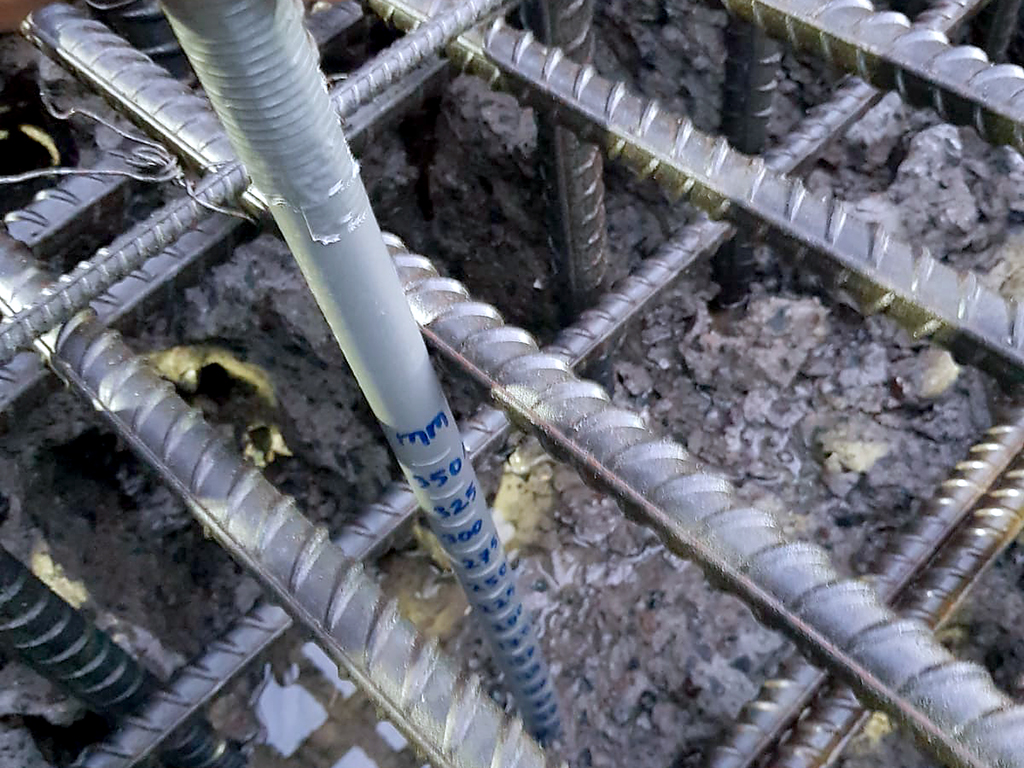
Personalen förstod genast att det fanns ett problem. Betongen höll redan på att stelna när de pumpade. Vibrering och andra korrigeringsmetoder misslyckades, och gjutningen var i slutändan misslyckad. Ännu värre var att betongen föll 350 millimeter för kort, vilket lämnade ett nät av exponerad armering.

För CLJV och Asia Waterjet Equipment blev utmaningarna allt fler, vilket ledde till en mycket svår reparation. Pilonen var nästan färdigbyggd. Även om CLJV hade budgeterat tid och pengar för små komplikationer hade man inte råd att riva hela pilonen och börja om från början.

Personal med handhållna spett eller grävmaskiner kunde ta bort betongen av dålig kvalitet, men bara genom att förstöra armeringen. De skulle behöva kapa det exponerade armeringsjärnet högst upp på pilonen för att komma åt betongen en halvmeter under. Mer armering skulle skadas när den dåliga betongen avlägsnades, och mikrosprickor från vibrationerna från tryckluftshammare eller grävmaskiner skulle försvaga den återstående betongen och äventyra pilonens integritet.

“Det fanns inget alternativ; armeringen och den befintliga goda betongen måste skyddas”, säger Parkhill. “Om CLJV skulle använda traditionella rivningsmetoder skulle de vara tvungna att öppna, bända isär armeringen där det var möjligt eller kapa den och sedan manuellt slå ut den dåliga betongen med en tryckluftshammare. Det finns ingen garanti för att en man som använder en hammare kan bedöma vad som är bra och dåligt, så det skulle sluta med att de tar bort extra mycket. Sedan måste de böja armeringen på plats igen utan att bryta den, eller svetsa eller skära nya gängor och foga ihop den med gängade kopplingar. Det skulle förlänga projektet med flera veckor och innebära en betydande kostnad för budgeten. De hade helt enkelt inte råd med det.”

Asia Waterjet Equipment visste att vattenbilning var den enda lösningen. Den icke-invasiva metoden använder högtrycksvattenstrålar som är så kraftfulla som 40.000 psi och som manipuleras av en automatiserad robot för att avlägsna lager av skadad betong. Högtrycksvattnet överskrider betongens hållfasthet så att befintliga porer och mikrosprickor vidgas och betongen bryts sönder på ett kontrollerat sätt. Till skillnad från andra mekaniska metoder är vattenbilning slagfri, vilket eliminerar de vibrationer som orsakar mikrosprickor.

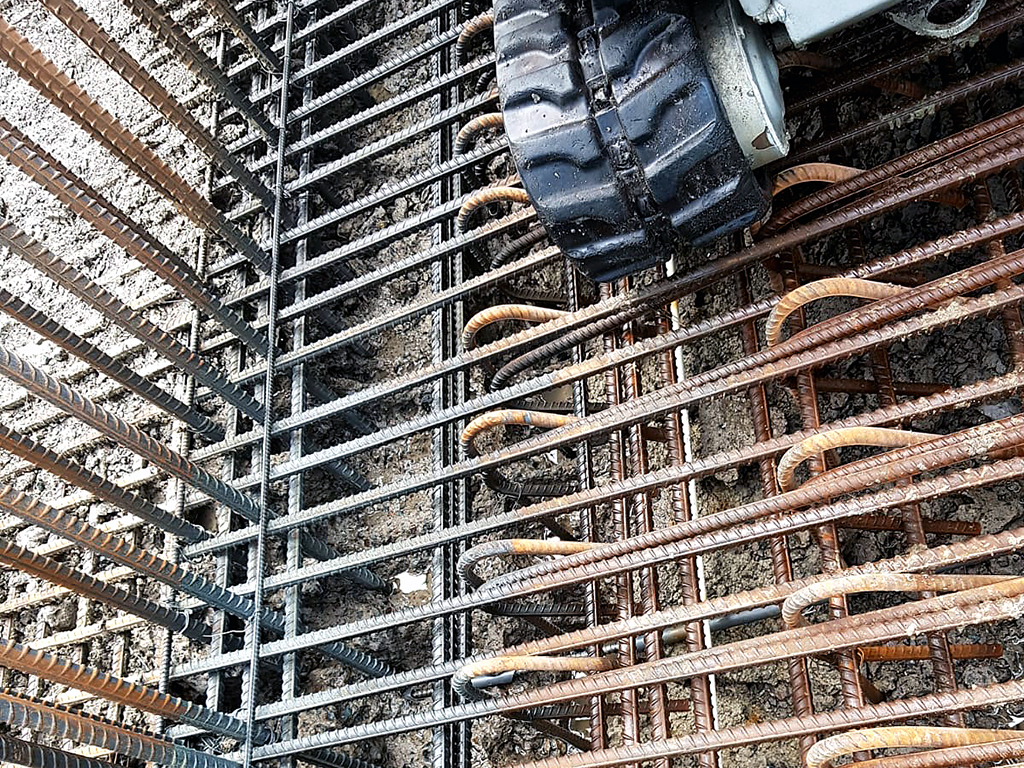
Dessutom uppfyller metoden den europeiska standarden EN 1504 och ger en överlägsen vidhäftningsyta för ny betong. Aqua Cutter 710V:s högtrycksvattenstråle lämnar en grov, oregelbunden profil efter att ha avlägsnat det första betonglagret, vilket ger en bättre bindningsstyrka. Roboten rengör och avkalkar också de exponerade armeringsjärnen och avlägsnar icke-synliga föroreningar som smuts, lera, fundamentlera, salter, klorider och sulfater.
 

No matter the project — from a simple structure to a massive, multi-million-dollar bridge system — efficient construction requires thorough planning. But, even with flawless logistics, projects can run into challenges that put deadlines in jeopardy. Construction is currently underway in the Philippines on a massive bridge system connecting Cebu City with Cordova on the southern end of Mactan Island. The 8.5-kilometer (5.3-mile) Cebu-Cordova Link Expressway, slated for completion in 2021, will span the Mactan Channel with 51-meter (167-feet) navigational clearance for shipping vessels. It promises to ease congestion between Cebu and Mactan and boost economic activities throughout the region by providing additional access to the island and the Mactan-Cebu International Airport for an estimated 50,000 vehicles a day. As expected, the construction — one of the largest infrastructure projects in the country — relies on a carefully choreographed plan of simultaneous operations to meet strict deadlines. Expert logistics allow crews to avoid many hurdles; however, unforeseen challenges can still arise. When a bad batch of concrete threatened to derail progress on one of the bridge’s first pilons, project managers needed a creative solution that could quickly remove the poor-quality concrete without damaging the rebar or putting the project behind schedule. Hydrodemolition was the only process with the precision and productivity to keep the project on track. Cebu Link Joint Venture (CLJV) contacted Singapore-based Asia Waterjet Equipment, the region’s premier Hydrodemolition experts. Access and site conditions presented quite a challenge, but with decades of experience in some of the most hazardous applications, Asia Waterjet Equipment was more than up to the task. With the clock ticking and monsoon season in full swing, the team arrived onsite with an Aquajet Aqua Cutter 710V Hydrodemolition robot and Jetstream HP Waterjetting Pump. Passion for Problem Solving In the early 1990s, Asia Waterjet Equipment’s founders were part of the brave crews tasked with containing oil wells in Kuwait that were destroyed during the Persian Gulf War. Their experience helped avert a huge environmental crisis. They remained in the Middle East, eventually founding Asia Waterjet Equipment in 2006, bringing high-pressure water jetting and robotic Hydrodemolition to the Middle East and South East Asia. Now, with offices in Dubai, Abu Dhabi, Saudi Arabia, Bahrain and Singapore and a strong presence and partnerships throughout these territories, the company is known for creative problem solving — delivering innovative cutting and cleaning solutions for hazardous areas or difficult to pump products in petrochemical, wastewater, mining, construction and other industries. They also offer a range of robotic solutions to help customers protect employees and perform beyond expectations. “Our focus has always been providing the cutting-edge tools to make challenging applications safer and more efficient,” said Chris Parkhill, Asia Waterjet Equipment Sales Director for Southeast Asia. “From the very beginning, we’ve been involved in some of the most hazardous operations out there. We understand the demands and dangers, which is why we partner with industry-leading equipment manufacturers for robust solutions that maximize safety and productivity.” Pairing the right tools with experienced team members who bring a wealth of industry knowledge and a deep understanding of local markets to each project has earned Asia Waterjet Equipment a reputation for high-quality results. In emerging markets, such as the Philippines, where the demands of multi-million-dollar projects have become a proving ground for newer, more efficient technologies, this expertise puts the company at the forefront. “From North Africa to South East Asia, we cover a lot of ground,” Parkhill said. “But being able to meet the contractor where they are is key to a successful solution. Working with CLJV, there were a number of challenges we had to overcome to keep the project on track. Hydrodemolition was the best solution and Aquajet was the best tool for the job.” Troubled Water Access was the primary problem. CLJV was conducting construction on several bridge pilons simultaneously. To minimize disruptions to the local community, the project’s primary staging area, as well as the initial pilon, were only accessible from the coast. This meant the concrete had to be mixed 2.5 kilometers (1.6 miles) down the coast then transported by barge to the jobsite. From there, the barge was grounded, and the trucks disembarked directly onto the beach. The pilon was 30 meters (98 feet) inland. Overall, the transportation delay had no negative impacts on the concrete, and the 16-by-14-meter (52.5-by-45.9-foot) pilon quickly grew to 4 meters (13 feet) tall. However, a complication with a single delivery threatened to throw the entire project behind schedule and over budget. “When you are working with concrete, sometimes things don’t go to plan,” Parkhill said. “It’s a delicate equation, after all, and even a slight miscalculation can ruin the mixture. Unfortunately, when that happens, there isn’t an easy fix.” Crews knew there was a problem immediately. The concrete was already setting as they pumped. Vibrating and other correctional methods failed, and the pour was ultimately unsuccessful. Even worse, the concrete fell 350 millimeters (13.8 inches) short, leaving a mesh of exposed rebar. For CLJV and Asia Waterjet Equipment, the challenges were adding up, making for a very difficult repair. The pilon was nearly complete. While CLJV had budgeted time and money for small complications, it could not afford to demolish the whole pilon and start over. Crews with handheld breakers or excavators could remove the poor-quality concrete, but only by destroying the rebar. They would have to cut the exposed rebar at the top of the pilon to access the concrete a foot below. More rebar would be damaged as the poor-quality concrete was removed, and microfractures from the vibration of jackhammers or excavators would weaken the remaining concrete, jeopardizing the pilon’s integrity. “There was no option; the rebar and existing good concrete had to be protected,” Parkhill said. “If CLJV went with traditional demolition methods, they’d have to open, pry apart where possible or cut the rebar and manually jack hammer out the bad concrete. There’s no guarantee a man using a jack hammer could gauge what’s good and what’s bad, so they’d end up removing extra. Then they’d have to bend the rebar back into place without breaking it, or weld or cut new threads and join with it threaded couplers. It would add weeks to the project and a significant cost to the budget. They simply couldn’t afford it.” Asia Waterjet Equipment knew Hydrodemolition was the only solution. The non-intrusive method uses high-pressure water jets as powerful as 40,000 psi manipulated by an automated robot to remove layers of deteriorated and damaged concrete. The high-pressure water exceeds the strength of the concrete to widen existing pores and microcracks, breaking it apart in a controlled manner. Unlike other mechanical methods, Hydrodemolition is impact free, eliminating the vibrations that cause microfractures. Additionally, the method meets European Standards EN 1504 and provides a superior bonding surface for new concrete. The Aqua Cutter 710V’s high-pressure water jet leaves a rough, irregular profile after removing the initial layer of concrete that results in a better bonding strength. The robot also cleans and descales the exposed rebar and removes non-visible contaminants such as dirt, mud, foundation mud, salts, chlorides and sulfates. Building Bridges Productivity was also a concern. With simultaneous construction continuing on several other pilons in the area, crews needed to remove the poor-quality concrete and complete repairs quickly — with minimal labor. With the ability to complete concrete removal tasks up to 25 times faster than a hand lance, the Aqua Cutter provided the necessary solution to keep the project on schedule. Asia Waterjet Equipment brought in Aquajet Special Application Manager Kjell Isaksson to support the operation. “There were a lot of variables and no room for error,” Parkhill said. “To minimize the risk of delays, we decided it would be best to have an Aquajet specialist on site.” Like the cement trucks, the Aqua Cutter and all support equipment, including a high-pressure waterjet power pack with a 4200 series Jetstream pump, had to access the site from the Mactan Chanel. Proximity to the water and the frequent, heavy rains of monsoon season made ground conditions difficult. However, since the Aqua Cutter is self-propelled with tracks, the uneven, muddy terrain presented no problems for Asia Waterjet Equipment. This minimized necessary site preparations and helped accelerate repairs. Crossing the Bridge to Success This mobility was also necessary for tackling the demolition itself. Once lifted the 4 meters (13 feet) onto the pile cap by a crane, the Aqua Cutter was able to easily maneuver over the rebar. The high-pressure pump was setup 7 meters (23 feet) away and connected to the Hydrodemolition robot by a high-pressure hose. To help reduce cost and increase production, Asia Waterjet Equipment opted to use seawater for the majority of the demolition rather than bring in fresh water. The company continually filled two 20-cubic meter (5,283 gallon) night tanks directly from the Mactan Chanel. Fresh water was only used during the last two days of the project to remove salt and other impurities that could impact bonding. Using the Hydrodemolition robot, operating at 1,000 bar (15,000 psi), and two employees, Asia Waterjet Equipment removed 10 cubic meters (13 cubic yards) of poor-quality concrete at a depth of 150-250 millimeters (6-10 inches) in days. “With the Aquajet Aqua Cutter, we increased productivity to a point where construction was back on schedule,” Parkhill said. “Without Hydrodemolition, there’s no way CLJV would have been able to do that.” The Future of Hydrodemolition While construction on the bridge system continues, Asia Waterjet Equipment is already on to the next challenge. “Construction in Southeast Asia is changing,” Parkhill said. “Robotic processes like Hydrodemolition are proving you can have productivity and safety. With innovative partners like Aquajet, Asia Waterjet Equipment is playing a leading role in facilitating that change.”

Med förmågan att utföra betongborttagning upp till 25 gånger snabbare än med en handlans var Aquajets Aqua Cutter den nödvändiga lösningen för att Asia Waterjet Equipments projekt skulle hålla tidsplanen.


Bygga broar

Produktiviteten var också ett problem. Eftersom flera andra pelare i området byggdes samtidigt var det nödvändigt att avlägsna den dåliga betongen och slutföra reparationerna snabbt – med minimal arbetsinsats.

Med förmågan att slutföra betongborttagning upp till 25 gånger snabbare än med en handlans var Aqua Cutter den nödvändiga lösningen för att projektet skulle hålla tidsplanen. Asia Waterjet Equipment tog in Kjell Isaksson, Special Application Manager på Aquajet, för att stödja verksamheten.

“Det fanns många variabler och inget utrymme för misstag”, säger Parkhill. “För att minimera risken för förseningar bestämde vi oss för att det vore bäst att ha en specialist från Aquajet på plats.”

Precis som cementbilarna var Aqua Cutter och all stödutrustning, inklusive ett högtryckspumpaggregat med en Jetstream-pump i 4200-serien, tvungna att ta sig till platsen från Mactan Chanel. Närheten till vattnet och monsunsäsongens frekventa, kraftiga regn gjorde markförhållandena svåra. Men eftersom Aqua Cutter är självgående med larvband utgjorde den ojämna och leriga terrängen inga problem för Asia Waterjet Equipment. Detta minimerade de nödvändiga förberedelserna på plats och bidrog till att påskynda reparationerna.
 

No matter the project — from a simple structure to a massive, multi-million-dollar bridge system — efficient construction requires thorough planning. But, even with flawless logistics, projects can run into challenges that put deadlines in jeopardy. Construction is currently underway in the Philippines on a massive bridge system connecting Cebu City with Cordova on the southern end of Mactan Island. The 8.5-kilometer (5.3-mile) Cebu-Cordova Link Expressway, slated for completion in 2021, will span the Mactan Channel with 51-meter (167-feet) navigational clearance for shipping vessels. It promises to ease congestion between Cebu and Mactan and boost economic activities throughout the region by providing additional access to the island and the Mactan-Cebu International Airport for an estimated 50,000 vehicles a day. As expected, the construction — one of the largest infrastructure projects in the country — relies on a carefully choreographed plan of simultaneous operations to meet strict deadlines. Expert logistics allow crews to avoid many hurdles; however, unforeseen challenges can still arise. When a bad batch of concrete threatened to derail progress on one of the bridge’s first pilons, project managers needed a creative solution that could quickly remove the poor-quality concrete without damaging the rebar or putting the project behind schedule. Hydrodemolition was the only process with the precision and productivity to keep the project on track. Cebu Link Joint Venture (CLJV) contacted Singapore-based Asia Waterjet Equipment, the region’s premier Hydrodemolition experts. Access and site conditions presented quite a challenge, but with decades of experience in some of the most hazardous applications, Asia Waterjet Equipment was more than up to the task. With the clock ticking and monsoon season in full swing, the team arrived onsite with an Aquajet Aqua Cutter 710V Hydrodemolition robot and Jetstream HP Waterjetting Pump. Passion for Problem Solving In the early 1990s, Asia Waterjet Equipment’s founders were part of the brave crews tasked with containing oil wells in Kuwait that were destroyed during the Persian Gulf War. Their experience helped avert a huge environmental crisis. They remained in the Middle East, eventually founding Asia Waterjet Equipment in 2006, bringing high-pressure water jetting and robotic Hydrodemolition to the Middle East and South East Asia. Now, with offices in Dubai, Abu Dhabi, Saudi Arabia, Bahrain and Singapore and a strong presence and partnerships throughout these territories, the company is known for creative problem solving — delivering innovative cutting and cleaning solutions for hazardous areas or difficult to pump products in petrochemical, wastewater, mining, construction and other industries. They also offer a range of robotic solutions to help customers protect employees and perform beyond expectations. “Our focus has always been providing the cutting-edge tools to make challenging applications safer and more efficient,” said Chris Parkhill, Asia Waterjet Equipment Sales Director for Southeast Asia. “From the very beginning, we’ve been involved in some of the most hazardous operations out there. We understand the demands and dangers, which is why we partner with industry-leading equipment manufacturers for robust solutions that maximize safety and productivity.” Pairing the right tools with experienced team members who bring a wealth of industry knowledge and a deep understanding of local markets to each project has earned Asia Waterjet Equipment a reputation for high-quality results. In emerging markets, such as the Philippines, where the demands of multi-million-dollar projects have become a proving ground for newer, more efficient technologies, this expertise puts the company at the forefront. “From North Africa to South East Asia, we cover a lot of ground,” Parkhill said. “But being able to meet the contractor where they are is key to a successful solution. Working with CLJV, there were a number of challenges we had to overcome to keep the project on track. Hydrodemolition was the best solution and Aquajet was the best tool for the job.” Troubled Water Access was the primary problem. CLJV was conducting construction on several bridge pilons simultaneously. To minimize disruptions to the local community, the project’s primary staging area, as well as the initial pilon, were only accessible from the coast. This meant the concrete had to be mixed 2.5 kilometers (1.6 miles) down the coast then transported by barge to the jobsite. From there, the barge was grounded, and the trucks disembarked directly onto the beach. The pilon was 30 meters (98 feet) inland. Overall, the transportation delay had no negative impacts on the concrete, and the 16-by-14-meter (52.5-by-45.9-foot) pilon quickly grew to 4 meters (13 feet) tall. However, a complication with a single delivery threatened to throw the entire project behind schedule and over budget. “When you are working with concrete, sometimes things don’t go to plan,” Parkhill said. “It’s a delicate equation, after all, and even a slight miscalculation can ruin the mixture. Unfortunately, when that happens, there isn’t an easy fix.” Crews knew there was a problem immediately. The concrete was already setting as they pumped. Vibrating and other correctional methods failed, and the pour was ultimately unsuccessful. Even worse, the concrete fell 350 millimeters (13.8 inches) short, leaving a mesh of exposed rebar. For CLJV and Asia Waterjet Equipment, the challenges were adding up, making for a very difficult repair. The pilon was nearly complete. While CLJV had budgeted time and money for small complications, it could not afford to demolish the whole pilon and start over. Crews with handheld breakers or excavators could remove the poor-quality concrete, but only by destroying the rebar. They would have to cut the exposed rebar at the top of the pilon to access the concrete a foot below. More rebar would be damaged as the poor-quality concrete was removed, and microfractures from the vibration of jackhammers or excavators would weaken the remaining concrete, jeopardizing the pilon’s integrity. “There was no option; the rebar and existing good concrete had to be protected,” Parkhill said. “If CLJV went with traditional demolition methods, they’d have to open, pry apart where possible or cut the rebar and manually jack hammer out the bad concrete. There’s no guarantee a man using a jack hammer could gauge what’s good and what’s bad, so they’d end up removing extra. Then they’d have to bend the rebar back into place without breaking it, or weld or cut new threads and join with it threaded couplers. It would add weeks to the project and a significant cost to the budget. They simply couldn’t afford it.” Asia Waterjet Equipment knew Hydrodemolition was the only solution. The non-intrusive method uses high-pressure water jets as powerful as 40,000 psi manipulated by an automated robot to remove layers of deteriorated and damaged concrete. The high-pressure water exceeds the strength of the concrete to widen existing pores and microcracks, breaking it apart in a controlled manner. Unlike other mechanical methods, Hydrodemolition is impact free, eliminating the vibrations that cause microfractures. Additionally, the method meets European Standards EN 1504 and provides a superior bonding surface for new concrete. The Aqua Cutter 710V’s high-pressure water jet leaves a rough, irregular profile after removing the initial layer of concrete that results in a better bonding strength. The robot also cleans and descales the exposed rebar and removes non-visible contaminants such as dirt, mud, foundation mud, salts, chlorides and sulfates. Building Bridges Productivity was also a concern. With simultaneous construction continuing on several other pilons in the area, crews needed to remove the poor-quality concrete and complete repairs quickly — with minimal labor. With the ability to complete concrete removal tasks up to 25 times faster than a hand lance, the Aqua Cutter provided the necessary solution to keep the project on schedule. Asia Waterjet Equipment brought in Aquajet Special Application Manager Kjell Isaksson to support the operation. “There were a lot of variables and no room for error,” Parkhill said. “To minimize the risk of delays, we decided it would be best to have an Aquajet specialist on site.” Like the cement trucks, the Aqua Cutter and all support equipment, including a high-pressure waterjet power pack with a 4200 series Jetstream pump, had to access the site from the Mactan Chanel. Proximity to the water and the frequent, heavy rains of monsoon season made ground conditions difficult. However, since the Aqua Cutter is self-propelled with tracks, the uneven, muddy terrain presented no problems for Asia Waterjet Equipment. This minimized necessary site preparations and helped accelerate repairs. Crossing the Bridge to Success This mobility was also necessary for tackling the demolition itself. Once lifted the 4 meters (13 feet) onto the pile cap by a crane, the Aqua Cutter was able to easily maneuver over the rebar. The high-pressure pump was setup 7 meters (23 feet) away and connected to the Hydrodemolition robot by a high-pressure hose. To help reduce cost and increase production, Asia Waterjet Equipment opted to use seawater for the majority of the demolition rather than bring in fresh water. The company continually filled two 20-cubic meter (5,283 gallon) night tanks directly from the Mactan Chanel. Fresh water was only used during the last two days of the project to remove salt and other impurities that could impact bonding. Using the Hydrodemolition robot, operating at 1,000 bar (15,000 psi), and two employees, Asia Waterjet Equipment removed 10 cubic meters (13 cubic yards) of poor-quality concrete at a depth of 150-250 millimeters (6-10 inches) in days. “With the Aquajet Aqua Cutter, we increased productivity to a point where construction was back on schedule,” Parkhill said. “Without Hydrodemolition, there’s no way CLJV would have been able to do that.” The Future of Hydrodemolition While construction on the bridge system continues, Asia Waterjet Equipment is already on to the next challenge. “Construction in Southeast Asia is changing,” Parkhill said. “Robotic processes like Hydrodemolition are proving you can have productivity and safety. With innovative partners like Aquajet, Asia Waterjet Equipment is playing a leading role in facilitating that change.”

Den ojämna och leriga terrängen på arbetsplatsen utgjorde inget problem för den självgående Aqua Cutter. Detta minimerade de nödvändiga förberedelserna på platsen och bidrog till att påskynda reparationerna.

Att korsa bron till framgång

Denna rörlighet var också nödvändig för att ta itu med själva rivningen. När Aqua Cutter hade lyfts 4 meter (13 fötter) upp på pålkapseln av en kran kunde den enkelt manövrera över armeringen. Högtryckspumpen placerades 7 meter (23 fötter) bort och anslöts till vattenbilningspumpen med en högtrycksslang.

För att minska kostnaderna och öka produktionen valde Asia Waterjet Equipment att använda havsvatten under större delen av rivningsarbetet i stället för att ta in färskvatten. Företaget fyllde kontinuerligt två 20 kubikmeter stora nattankar direkt från Mactan Chanel. Färskvatten användes endast under de två sista dagarna av projektet för att avlägsna salt och andra föroreningar som kunde påverka limningen.

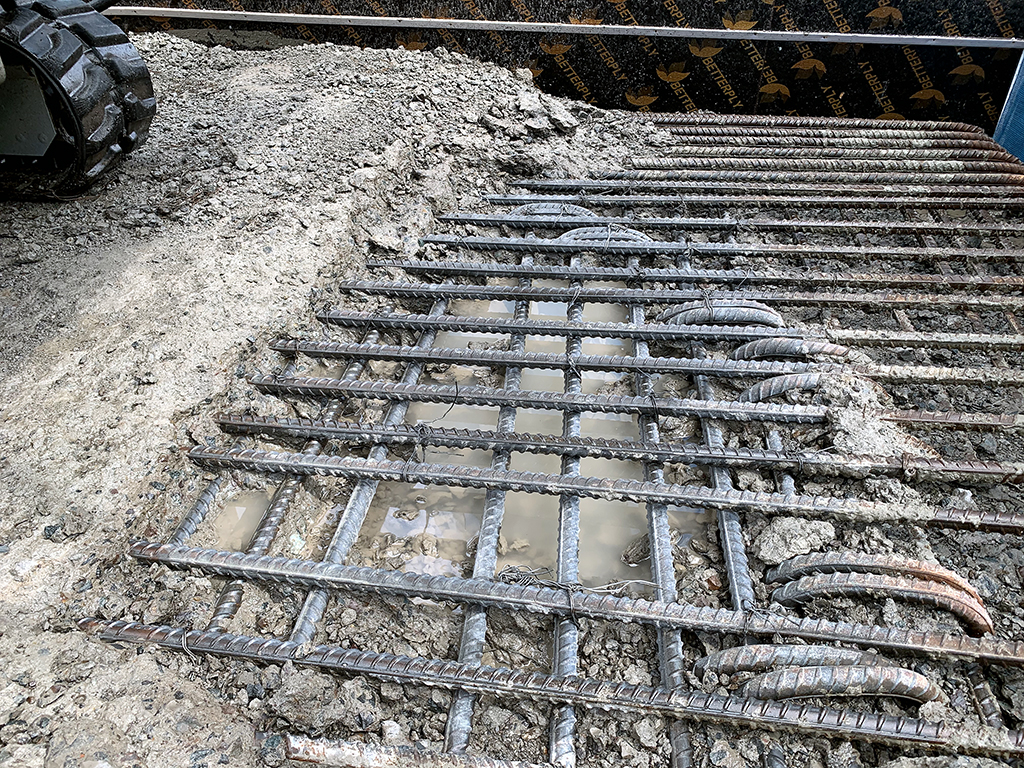
Med hjälp av vattenbilningsroboten, som arbetar med en trycknivå på 1.000 bar (15.000 psi), och två anställda avlägsnade Asia Waterjet Equipment 10 kubikmeter betong av dålig kvalitet på ett djup av 150-250 millimeter (6-10 tum) på några dagar.

“Med Aquajet Aqua Cutter ökade vi produktiviteten så mycket att bygget kunde genomföras enligt tidsplanen igen”, säger Parkhill. “Utan vattenbilning skulle CLJV aldrig ha kunnat göra det.”
 

No matter the project — from a simple structure to a massive, multi-million-dollar bridge system — efficient construction requires thorough planning. But, even with flawless logistics, projects can run into challenges that put deadlines in jeopardy. Construction is currently underway in the Philippines on a massive bridge system connecting Cebu City with Cordova on the southern end of Mactan Island. The 8.5-kilometer (5.3-mile) Cebu-Cordova Link Expressway, slated for completion in 2021, will span the Mactan Channel with 51-meter (167-feet) navigational clearance for shipping vessels. It promises to ease congestion between Cebu and Mactan and boost economic activities throughout the region by providing additional access to the island and the Mactan-Cebu International Airport for an estimated 50,000 vehicles a day. As expected, the construction — one of the largest infrastructure projects in the country — relies on a carefully choreographed plan of simultaneous operations to meet strict deadlines. Expert logistics allow crews to avoid many hurdles; however, unforeseen challenges can still arise. When a bad batch of concrete threatened to derail progress on one of the bridge’s first pilons, project managers needed a creative solution that could quickly remove the poor-quality concrete without damaging the rebar or putting the project behind schedule. Hydrodemolition was the only process with the precision and productivity to keep the project on track. Cebu Link Joint Venture (CLJV) contacted Singapore-based Asia Waterjet Equipment, the region’s premier Hydrodemolition experts. Access and site conditions presented quite a challenge, but with decades of experience in some of the most hazardous applications, Asia Waterjet Equipment was more than up to the task. With the clock ticking and monsoon season in full swing, the team arrived onsite with an Aquajet Aqua Cutter 710V Hydrodemolition robot and Jetstream HP Waterjetting Pump. Passion for Problem Solving In the early 1990s, Asia Waterjet Equipment’s founders were part of the brave crews tasked with containing oil wells in Kuwait that were destroyed during the Persian Gulf War. Their experience helped avert a huge environmental crisis. They remained in the Middle East, eventually founding Asia Waterjet Equipment in 2006, bringing high-pressure water jetting and robotic Hydrodemolition to the Middle East and South East Asia. Now, with offices in Dubai, Abu Dhabi, Saudi Arabia, Bahrain and Singapore and a strong presence and partnerships throughout these territories, the company is known for creative problem solving — delivering innovative cutting and cleaning solutions for hazardous areas or difficult to pump products in petrochemical, wastewater, mining, construction and other industries. They also offer a range of robotic solutions to help customers protect employees and perform beyond expectations. “Our focus has always been providing the cutting-edge tools to make challenging applications safer and more efficient,” said Chris Parkhill, Asia Waterjet Equipment Sales Director for Southeast Asia. “From the very beginning, we’ve been involved in some of the most hazardous operations out there. We understand the demands and dangers, which is why we partner with industry-leading equipment manufacturers for robust solutions that maximize safety and productivity.” Pairing the right tools with experienced team members who bring a wealth of industry knowledge and a deep understanding of local markets to each project has earned Asia Waterjet Equipment a reputation for high-quality results. In emerging markets, such as the Philippines, where the demands of multi-million-dollar projects have become a proving ground for newer, more efficient technologies, this expertise puts the company at the forefront. “From North Africa to South East Asia, we cover a lot of ground,” Parkhill said. “But being able to meet the contractor where they are is key to a successful solution. Working with CLJV, there were a number of challenges we had to overcome to keep the project on track. Hydrodemolition was the best solution and Aquajet was the best tool for the job.” Troubled Water Access was the primary problem. CLJV was conducting construction on several bridge pilons simultaneously. To minimize disruptions to the local community, the project’s primary staging area, as well as the initial pilon, were only accessible from the coast. This meant the concrete had to be mixed 2.5 kilometers (1.6 miles) down the coast then transported by barge to the jobsite. From there, the barge was grounded, and the trucks disembarked directly onto the beach. The pilon was 30 meters (98 feet) inland. Overall, the transportation delay had no negative impacts on the concrete, and the 16-by-14-meter (52.5-by-45.9-foot) pilon quickly grew to 4 meters (13 feet) tall. However, a complication with a single delivery threatened to throw the entire project behind schedule and over budget. “When you are working with concrete, sometimes things don’t go to plan,” Parkhill said. “It’s a delicate equation, after all, and even a slight miscalculation can ruin the mixture. Unfortunately, when that happens, there isn’t an easy fix.” Crews knew there was a problem immediately. The concrete was already setting as they pumped. Vibrating and other correctional methods failed, and the pour was ultimately unsuccessful. Even worse, the concrete fell 350 millimeters (13.8 inches) short, leaving a mesh of exposed rebar. For CLJV and Asia Waterjet Equipment, the challenges were adding up, making for a very difficult repair. The pilon was nearly complete. While CLJV had budgeted time and money for small complications, it could not afford to demolish the whole pilon and start over. Crews with handheld breakers or excavators could remove the poor-quality concrete, but only by destroying the rebar. They would have to cut the exposed rebar at the top of the pilon to access the concrete a foot below. More rebar would be damaged as the poor-quality concrete was removed, and microfractures from the vibration of jackhammers or excavators would weaken the remaining concrete, jeopardizing the pilon’s integrity. “There was no option; the rebar and existing good concrete had to be protected,” Parkhill said. “If CLJV went with traditional demolition methods, they’d have to open, pry apart where possible or cut the rebar and manually jack hammer out the bad concrete. There’s no guarantee a man using a jack hammer could gauge what’s good and what’s bad, so they’d end up removing extra. Then they’d have to bend the rebar back into place without breaking it, or weld or cut new threads and join with it threaded couplers. It would add weeks to the project and a significant cost to the budget. They simply couldn’t afford it.” Asia Waterjet Equipment knew Hydrodemolition was the only solution. The non-intrusive method uses high-pressure water jets as powerful as 40,000 psi manipulated by an automated robot to remove layers of deteriorated and damaged concrete. The high-pressure water exceeds the strength of the concrete to widen existing pores and microcracks, breaking it apart in a controlled manner. Unlike other mechanical methods, Hydrodemolition is impact free, eliminating the vibrations that cause microfractures. Additionally, the method meets European Standards EN 1504 and provides a superior bonding surface for new concrete. The Aqua Cutter 710V’s high-pressure water jet leaves a rough, irregular profile after removing the initial layer of concrete that results in a better bonding strength. The robot also cleans and descales the exposed rebar and removes non-visible contaminants such as dirt, mud, foundation mud, salts, chlorides and sulfates. Building Bridges Productivity was also a concern. With simultaneous construction continuing on several other pilons in the area, crews needed to remove the poor-quality concrete and complete repairs quickly — with minimal labor. With the ability to complete concrete removal tasks up to 25 times faster than a hand lance, the Aqua Cutter provided the necessary solution to keep the project on schedule. Asia Waterjet Equipment brought in Aquajet Special Application Manager Kjell Isaksson to support the operation. “There were a lot of variables and no room for error,” Parkhill said. “To minimize the risk of delays, we decided it would be best to have an Aquajet specialist on site.” Like the cement trucks, the Aqua Cutter and all support equipment, including a high-pressure waterjet power pack with a 4200 series Jetstream pump, had to access the site from the Mactan Chanel. Proximity to the water and the frequent, heavy rains of monsoon season made ground conditions difficult. However, since the Aqua Cutter is self-propelled with tracks, the uneven, muddy terrain presented no problems for Asia Waterjet Equipment. This minimized necessary site preparations and helped accelerate repairs. Crossing the Bridge to Success This mobility was also necessary for tackling the demolition itself. Once lifted the 4 meters (13 feet) onto the pile cap by a crane, the Aqua Cutter was able to easily maneuver over the rebar. The high-pressure pump was setup 7 meters (23 feet) away and connected to the Hydrodemolition robot by a high-pressure hose. To help reduce cost and increase production, Asia Waterjet Equipment opted to use seawater for the majority of the demolition rather than bring in fresh water. The company continually filled two 20-cubic meter (5,283 gallon) night tanks directly from the Mactan Chanel. Fresh water was only used during the last two days of the project to remove salt and other impurities that could impact bonding. Using the Hydrodemolition robot, operating at 1,000 bar (15,000 psi), and two employees, Asia Waterjet Equipment removed 10 cubic meters (13 cubic yards) of poor-quality concrete at a depth of 150-250 millimeters (6-10 inches) in days. “With the Aquajet Aqua Cutter, we increased productivity to a point where construction was back on schedule,” Parkhill said. “Without Hydrodemolition, there’s no way CLJV would have been able to do that.” The Future of Hydrodemolition While construction on the bridge system continues, Asia Waterjet Equipment is already on to the next challenge. “Construction in Southeast Asia is changing,” Parkhill said. “Robotic processes like Hydrodemolition are proving you can have productivity and safety. With innovative partners like Aquajet, Asia Waterjet Equipment is playing a leading role in facilitating that change.”

Med hjälp av vattenbilningsroboten, som arbetar med en trycknivå på 1.000 bar (15.000 psi), och två anställda avlägsnade Asia Waterjet Equipment 10 kubikmeter betong av dålig kvalitet på ett djup av 150-250 millimeter (6-10 tum).


Framtiden för vattenbilning

Medan bygget av brosystemet fortsätter är Asia Waterjet Equipment redan på väg mot nästa utmaning.

“Byggbranschen i Sydostasien håller på att förändras”, säger Parkhill. “Robotstyrda processer som vattenbilning visar att det går att kombinera produktivitet och säkerhet. Med innovativa partners som Aquajet spelar Asia Waterjet Equipment en ledande roll i att underlätta den förändringen.”


Korta fakta

Plats:
Ett massivt brosystem som förbinder Cebu City med Cordova på den södra delen av Mactan Island i Filippinerna.

Broprojekt:
Den 8,5 kilometer långa motorvägen Cebu-Cordova Link Expressway, som beräknas vara klar 2021, kommer att gå över Mactan-kanalen med en segelfri höjd på 51 meter (167 fötter) för fartyg.

Projekt för vattenbilning:
Selektiv borttagning av betong av dålig kvalitet utan att skada armeringen eller försena projektet.

Material som rivits:
10 kubikmeter betong av dålig kvalitet på ett djup av 150-250 millimeter (6-10 tum).

Utrustning: Aqua Cutter 710V.


Mer information

Aqua Cutter 710V

Vattenbilning

Aquajets globala återförsäljarnätverk


Utskrivbar pdf

Aquajet On location – Aquajets innovativa robotlösning ger produktivitet för filippinskt broprojekt