Hydrodemolition is a cutting-edge technique that utilizes high-pressure water jets to remove concrete with precision and efficiency. This method is ideal for a wide range of applications, from surface preparation to structural maintenance, without causing damage to the underlying material. Aquajet’s hydrodemolition equipment is designed to handle the most demanding projects worldwide, offering unparalleled versatility and reliability. With our advanced technology, the possibilities for hydrodemolition are endless, making it the preferred choice for professionals seeking top-tier results.
What is hydrodemolition?

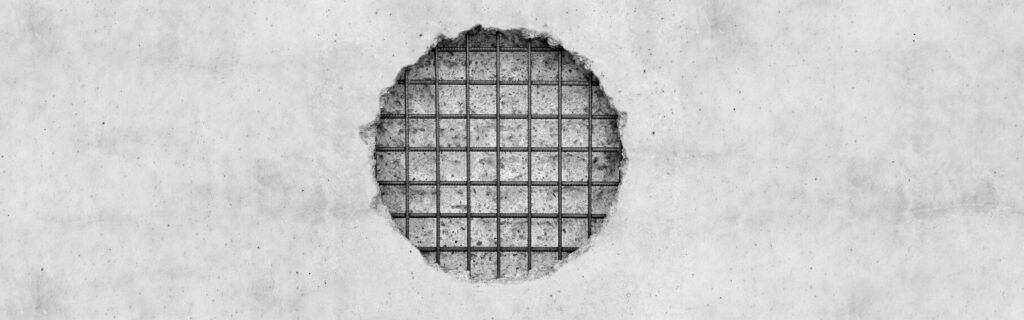
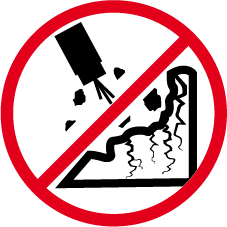
Hydrodemolition is not demolition.
It’s precision removal.



IMPACT-FREE
VIBRATION-FREE
NO MICRO CRACKS
NO DAMAGED REBARS
IMPROVED SURFACE QUALITY
SUPERIOR BONDING
ENVIRONMENTALLY FRIENDLY
NO SILICA DUST
SAFER WORK ENVIRONMENT
HIGHER PRODUCTIVITY
LOWER LIFCYCLE COST
How does hydrodemolition work?
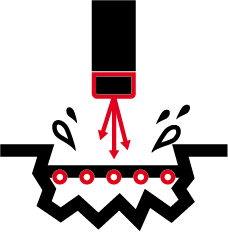
Hydrodemolition works by allowing high-pressure water to penetrate the concrete’s natural pores and cracks. As pressure builds inside the weakened material, the concrete breaks apart and is removed in a controlled way.
By adjusting exposure time and lance movement, the operator can control both removal depth and precision — from selective removal of damaged concrete to fully controlled cuts.
The result is a clean, rough surface with intact reinforcement, ready for repair or new material application.
Results depends on pressure and flow
To achieve optimal results in hydrodemolition, it’s crucial to align the pressure and flow of the water with the project’s specific objectives, such as removing a preset depth of concrete, surface preparation, or rust removal. Both water pressure and volume are vital; higher pressure and low flow yield precise cuts, while lower pressure and high flow enable selective removal of deteriorated concrete. Adjusting these parameters ensures efficient, high-quality project completion.
-
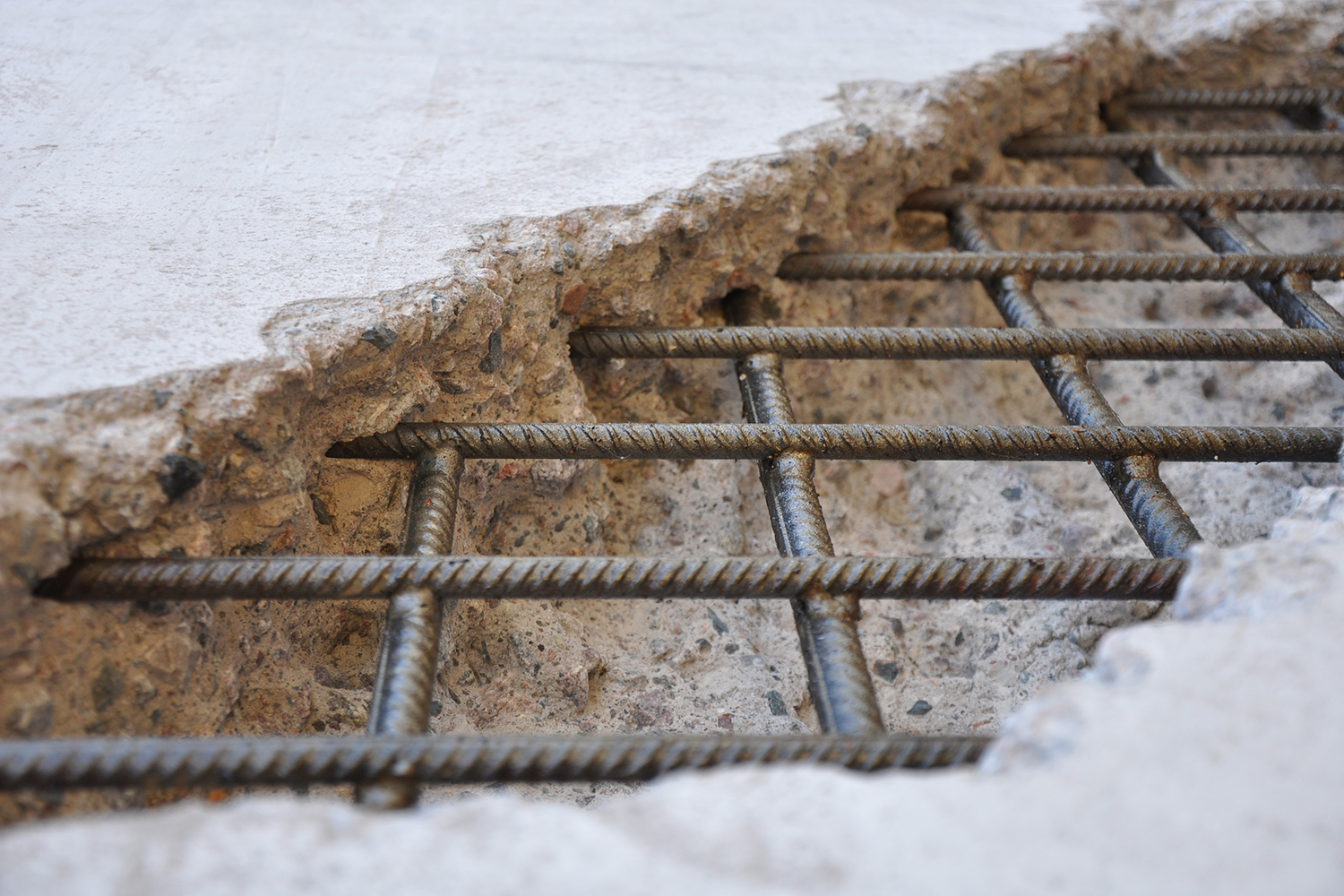
Selective removal
Selective removal is one of the basic principles of hydrodemolition. By using a lower water pressure (typically 1000 bar /…
Selective removal is one of the basic principles of hydrodemolition. By using a lower water pressure (typically 1000 bar / 14 500 psi) the effect on the concrete will be selective, meaning that only the deteriorated or damaged concrete will be removed while the sound concrete will be left intact. As a result, the sides and the bottom of the cut will be a little rough since it follows the quality of the concrete.
-
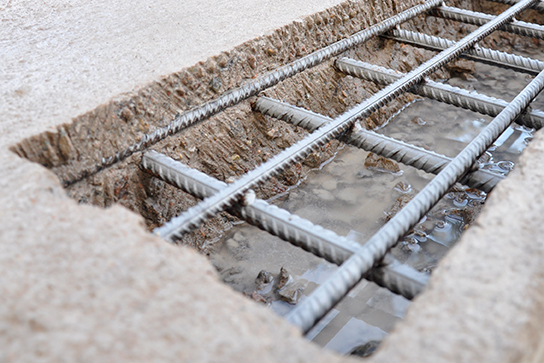
Controlled depth removal
Controlled depth removal means using higher water pressure (2500 bar / 36259 psi), that will result in a more cutting…
Controlled depth removal means using higher water pressure (2500 bar / 36259 psi), that will result in a more cutting effect on the concrete. The result will be more even along both the sides and the base of the cut. It will remove all concrete specified in the control system, regardless of the quality of the underlying concrete.
-
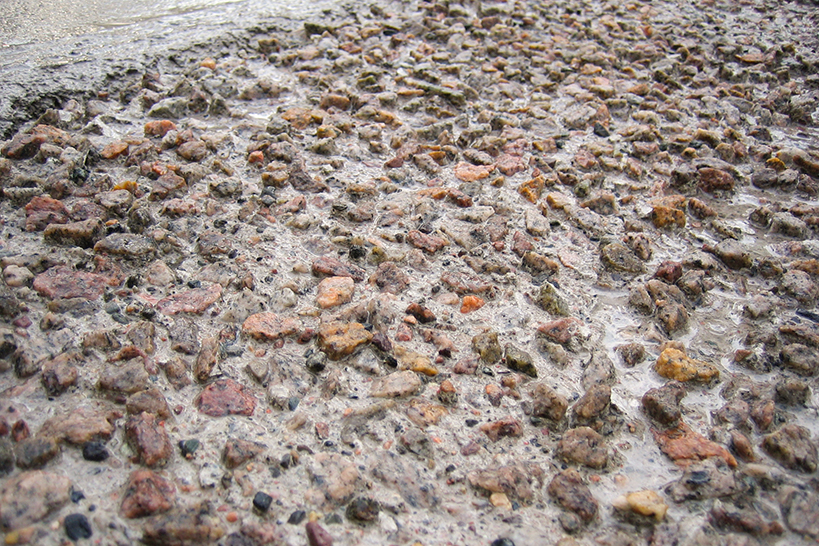
Scarifying/Surface preparation
Hydrodemolition can be used to scarify or roughen concrete surfaces in preparation for overlays, coatings, or bonding of new concrete….
Hydrodemolition can be used to scarify or roughen concrete surfaces in preparation for overlays, coatings, or bonding of new concrete. When the aim is to create an optimal bonding surface while minimizing material removal, employing a rotating tool proves highly effective. This will ensure precise and swift removal of a shallow layer of concrete, resulting in an rough bonding surface for new coating.
-
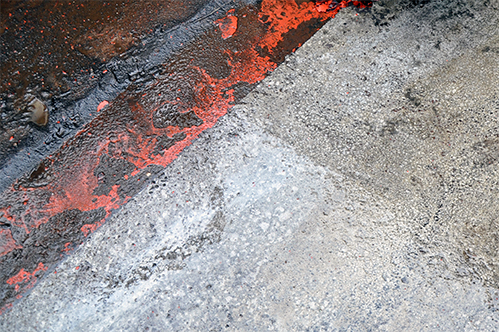
Rust and paint removal
High-pressure water can also be used for paint and rust removal, providing an effective alternative to grit blasting. This method…
High-pressure water can also be used for paint and rust removal, providing an effective alternative to grit blasting. This method eliminates dust pollution and the need to dispose of contaminated abrasive media, leaving a clean steel surface ready for coating or inspection. It can also be used to remove rubber deposits — such as tire residue on airport runways — safely and efficiently.
-
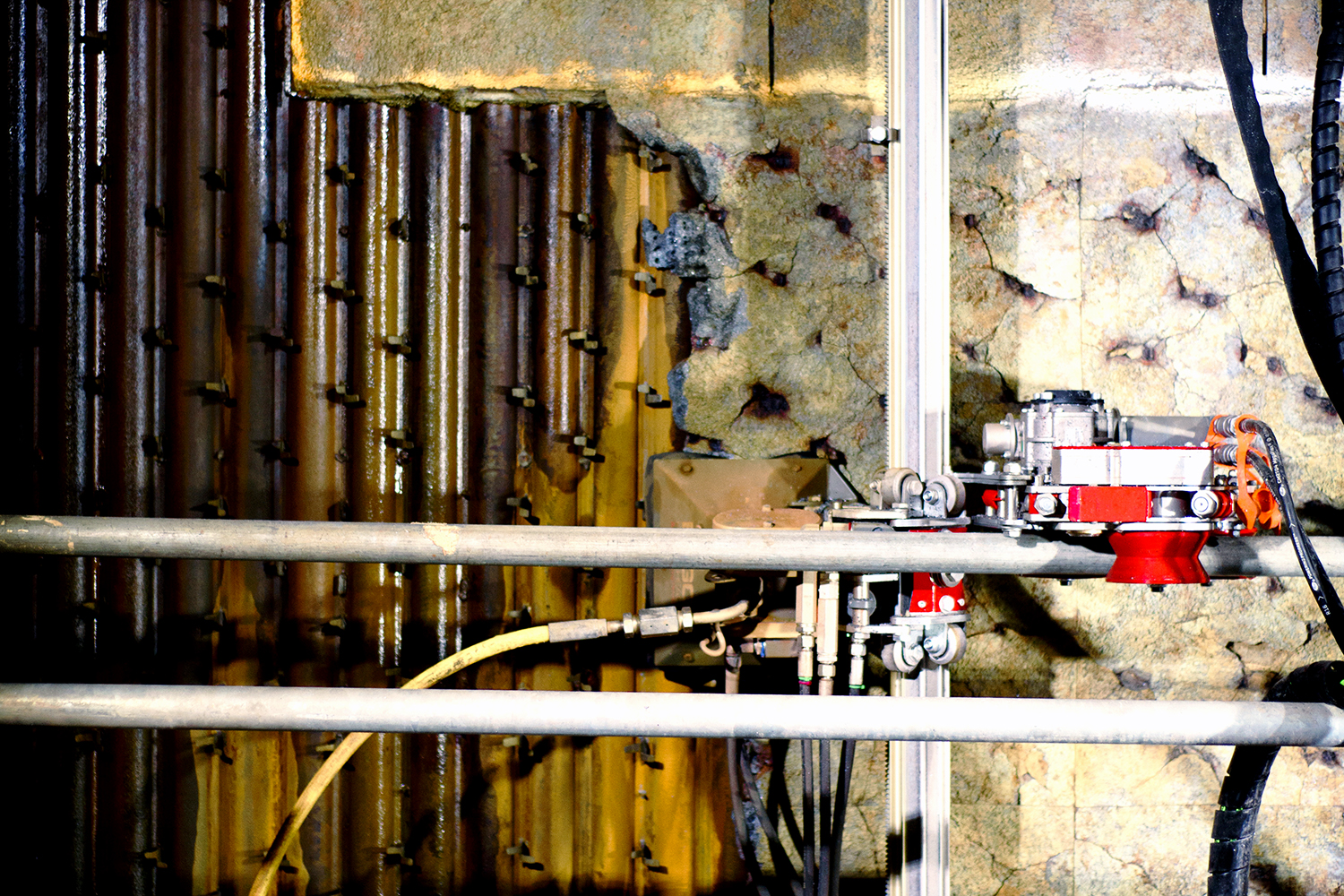
Industrial cleaning
Traditional industrial cleaning has often relied on handheld tools — a labor-intensive and potentially hazardous process. By incorporating robotic hydrodemolition,…
Traditional industrial cleaning has often relied on handheld tools — a labor-intensive and potentially hazardous process. By incorporating robotic hydrodemolition, these risks can be significantly reduced or even eliminated. Increasingly, contractors are adopting automated cleaning methods to improve safety, enhance efficiency, and achieve consistent results in demanding applications such as refractory removal.
Applications
Hydrodemolition is used across a wide range of applications:
- Bridge and infrastructure repair
- Tunnels and underground structures
- Parking structures
- Dams and hydroelectric facilities
- Industrial plants
- Underwater and marine environments
Its ability to work vertically, horizontally, overhead, and underwater makes it a highly versatile solution.
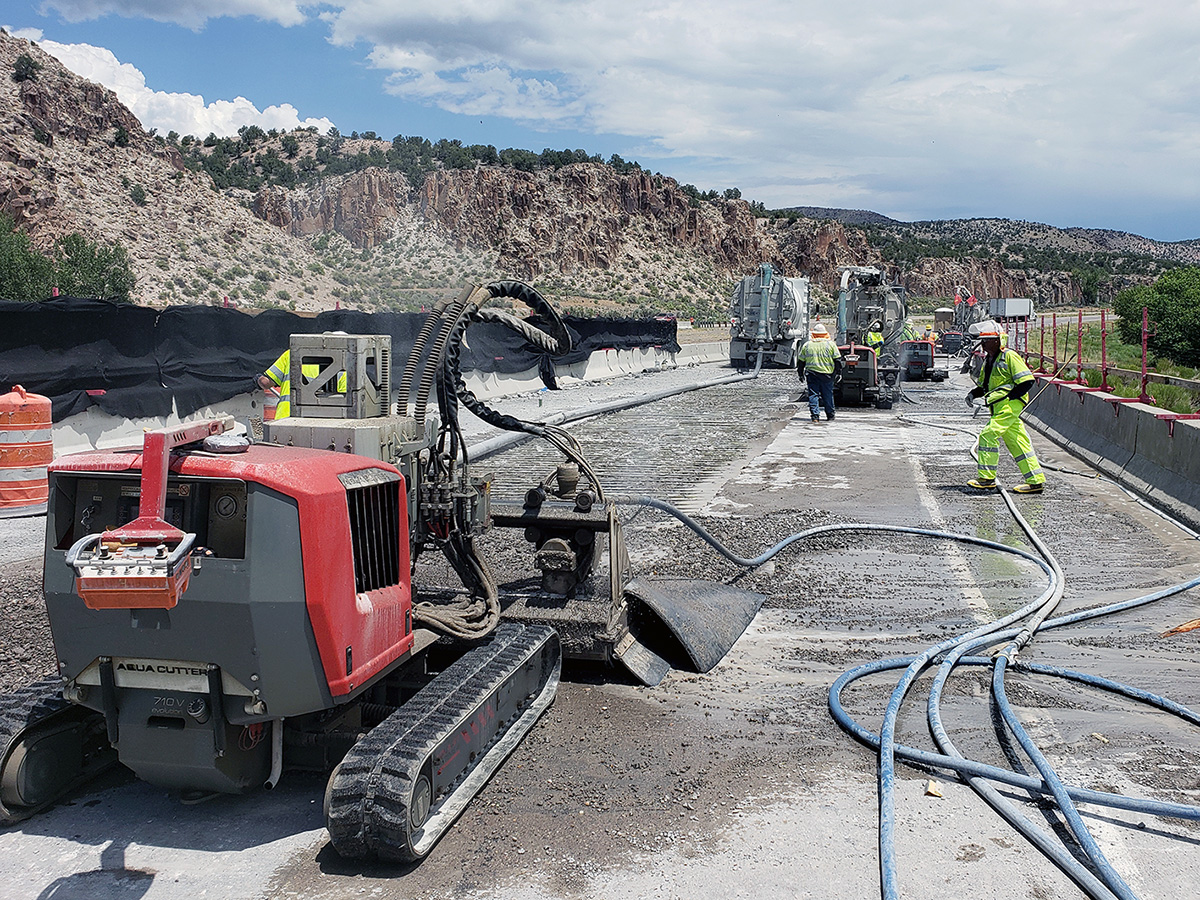
Any surface. Any angle. One method.
Advantages with hydrodemolition
Compared to traditional mechanical methods, hydrodemolition offers clear advantages:
- Preserves structural integrity — No vibrations mean no microcracks.
- Superior bonding surface — Leaves a rough, clean surface ideal for bonding.
- Selective removal — Removes only damaged concrete.
- Safer working environment — Reduces dust and airborne silica.
- Higher productivity — Robotic systems enable continuous, consistent operation.
- Lower lifecycle cost — Longer-lasting repairs reduce future work.
The complete hydrodemolition system
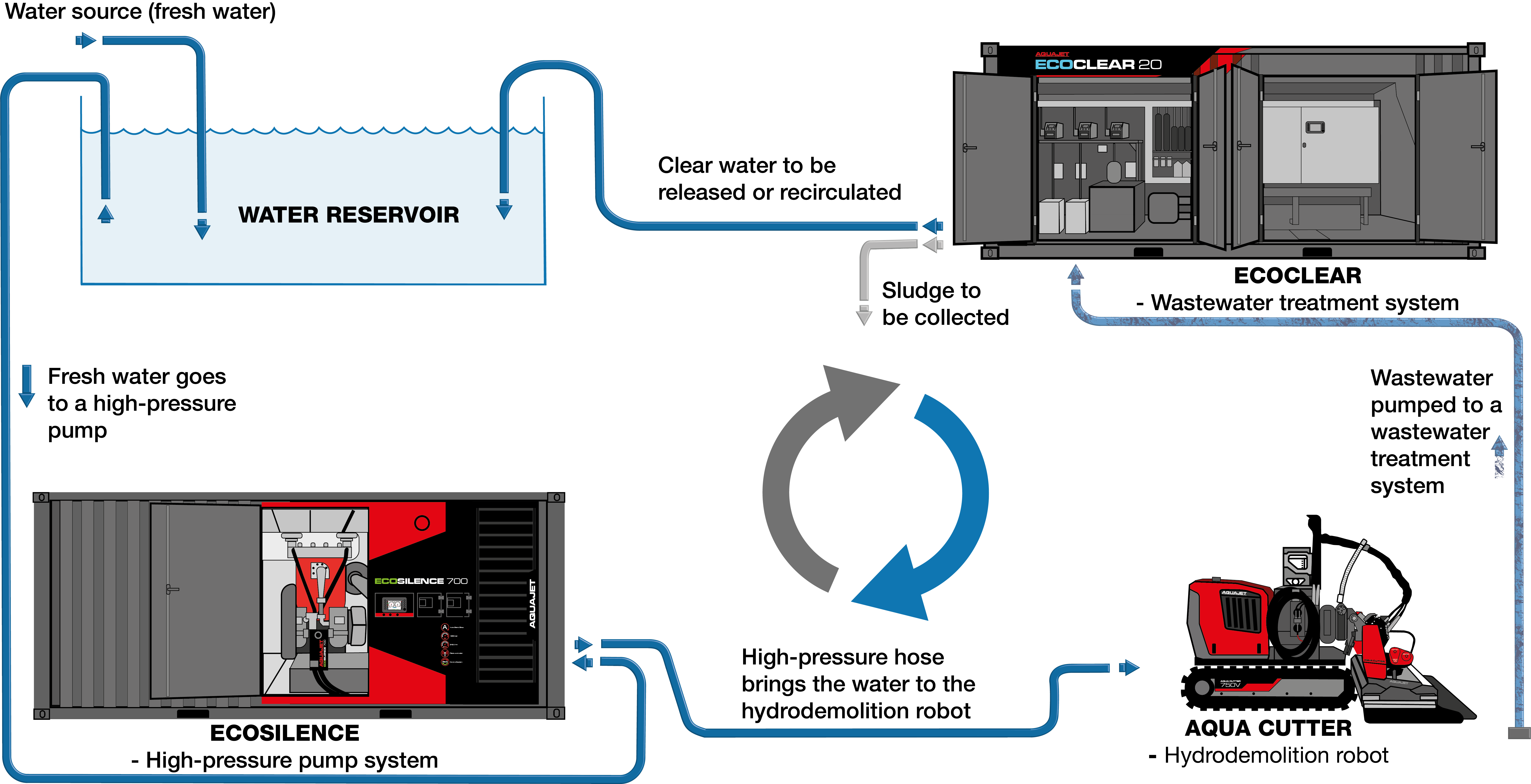
Hydrodemolition is not just a machine — it’s a system.
A complete setup includes:
- Robot – performs the removal
- High-pressure pump – generates the water power
- Water treatment system – manages and recirculates water
Together, these components create a controlled, efficient, and environmentally responsible process.
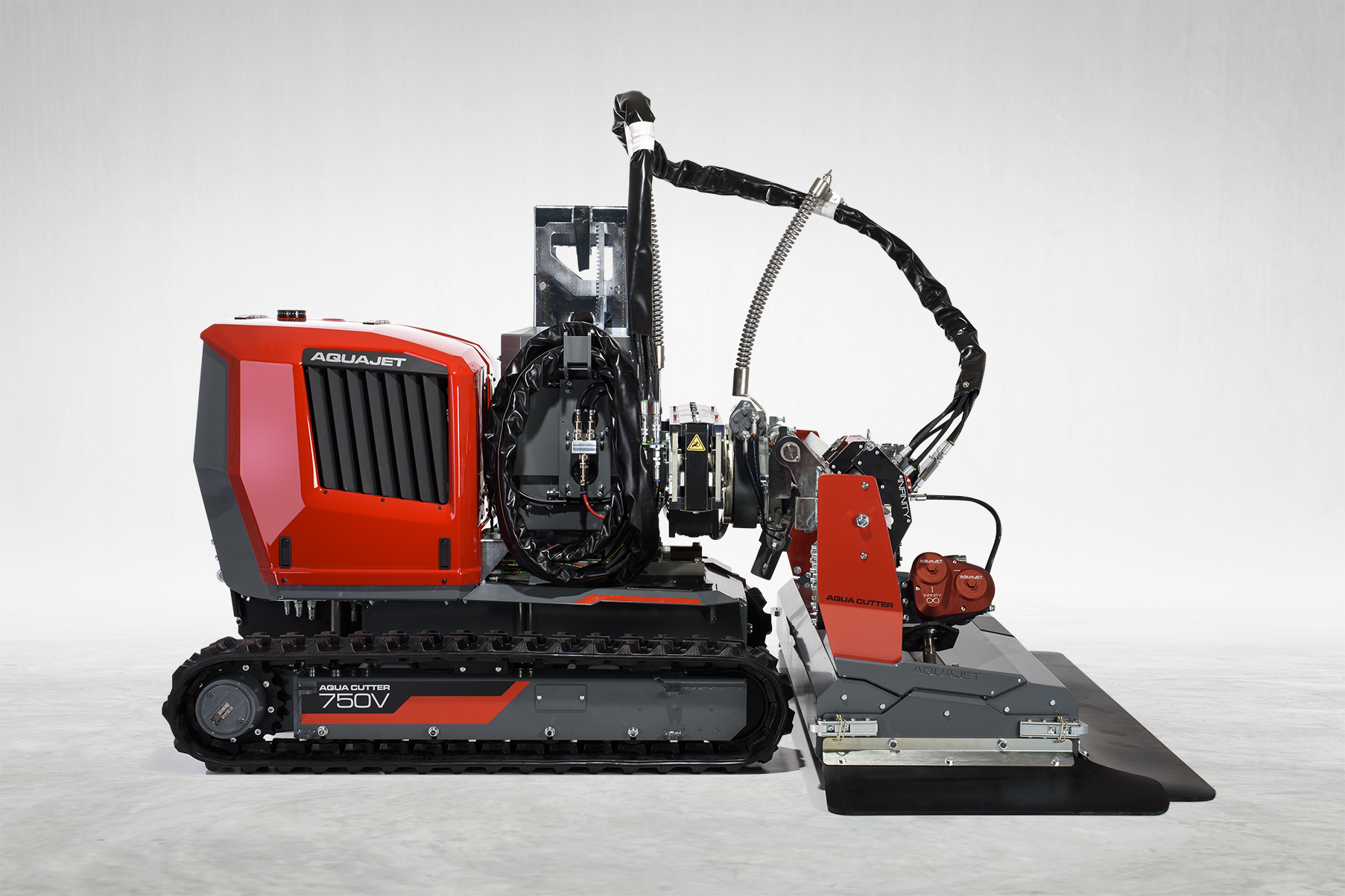
Hydrodemolition robots
Advanced machines designed for precise concrete
removal and surface preparation on both reinforced and non-reinforced structures in all orientations. Equipped
with computerized control systems, they accurately
manipulate high-pressure water jets and offer remote operation for safe oversight.
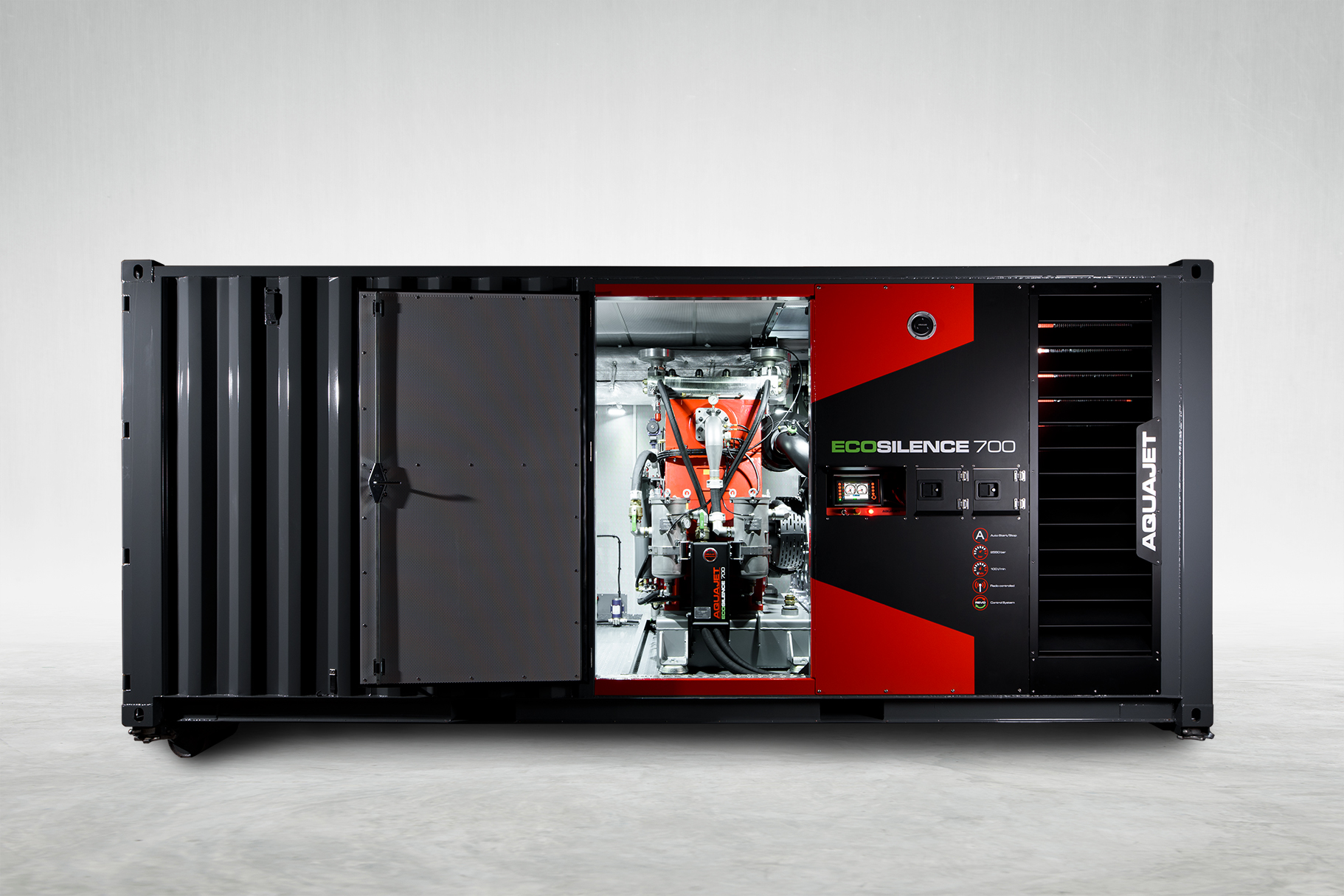
High-pressure pumps
High-pressure pumps, with a minimum power rating of
300 hp/220 kW, are vital components of hydrodemolition
equipment. These pumps generate the high water pressure necessary to propel water jets and effectively dislodge concrete, ensuring efficient concrete removal.
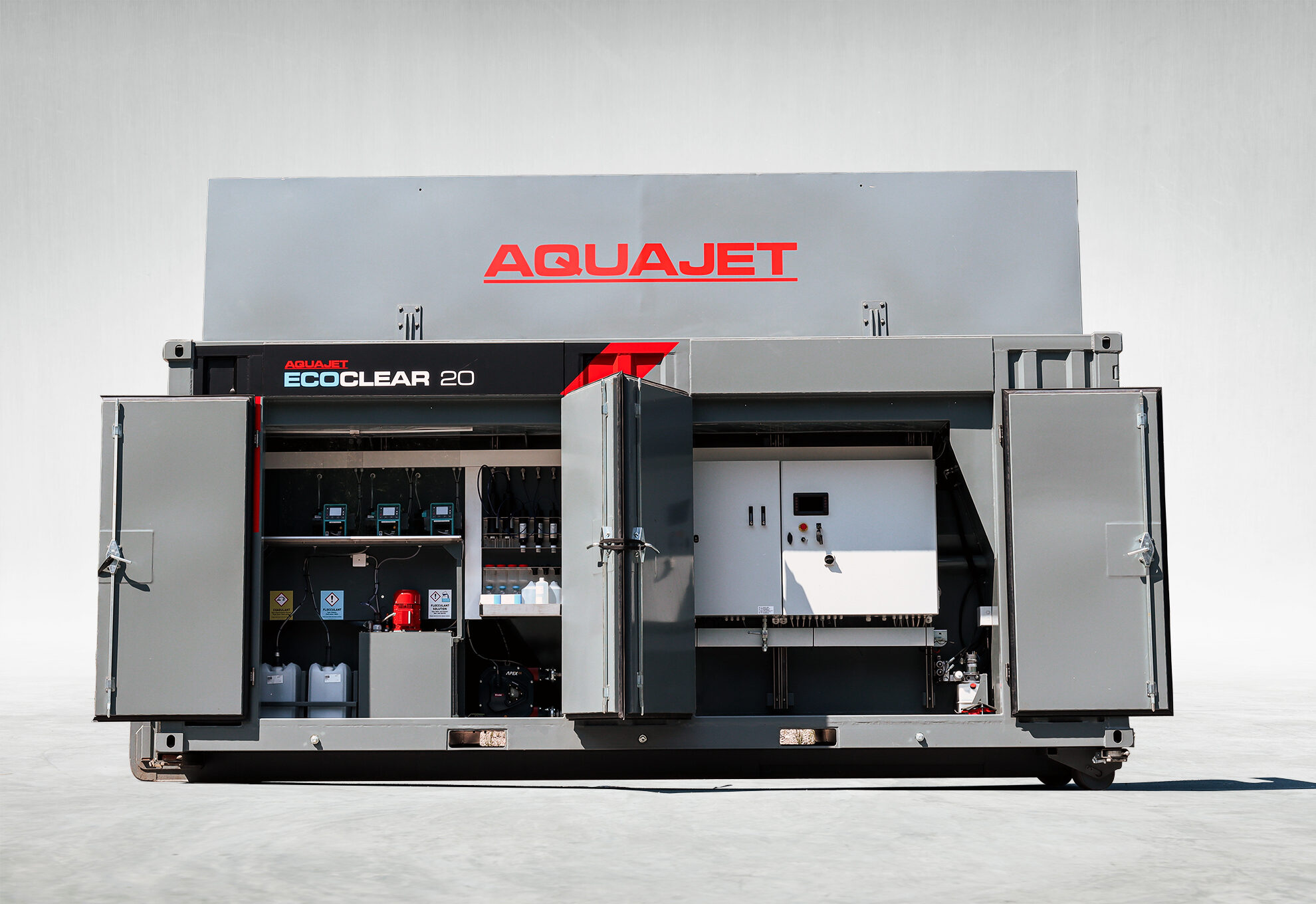
Wastewater treatment system
Hydrodemolition generates a significant amount of
wastewater with elevated pH levels, containing concrete
particles and debris. To comply with environmental regulations and ensure proper disposal, a wastewater treatment system can be employed. Ecoclear corrects the pH, separates and removes suspended solids from
the wastewater, allowing for the safe disposal or recycling of the treated water.